
Episode Conversation
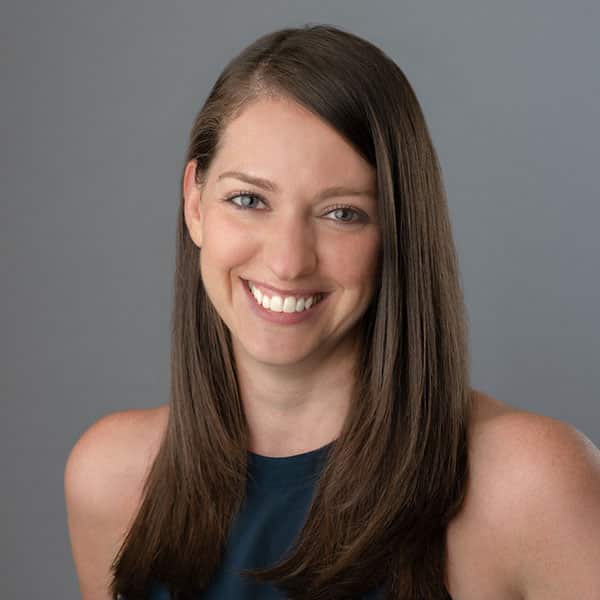
In this episode’s guest I’m happy to announce is Jenn Trepeck. She has been described as a force of nature in the wellness space. She’s been recognized as one of the podcast magazines, 40 Under 40 nominated for the 2022 International Women Podcast Award for visionary and leadership, and won the Air Worm Worthy First Independent Podcast Award for Best Health Podcast of 2024. Currently, Jenn is a nominee for the 2024 Podcast Awards for best health podcast and best expert guest.
She is an optimal health coach, a podcaster, and a business consultant. Jenn grew up the skinny kid in a family of dieters which was awesome until things went away and she began to her weight loss management saga. Ultimately through Jenn learned that the nutrition and education we all are supposed to know, but no one ever really taught us.
This completely changed her life and allowed her to say she’s kicked her food issues. From then Jenn set on a mission to pay it forward and help people help themselves. After over a decade of working with clients, Jenn started Salad with a Side of Fries podcast. Based on science, yet lighthearted Jenn talks about living life while still making ourselves our health and a priority.
Welcome to the podcast, Jenn. Thank you for being here.
Thank you, Dr. Gina. How are you? I’m excited for our conversation.
Passion For Health And Wellness
I’m great. Thank you so much. Let’s just talk about people say you’re a fortune nature in the wellness space. What’s driven your passion for health and wellness, especially given your personal weight management journey?
I think part of the passion is my own. I call it a saga. I think the word journey doesn’t do it justice. Journey is so trite these days. Like this was a saga. It was dramatic. There was a lot. A lot of it stems from my own experience, but more than the fact that I had that all too familiar experience of yo-yo dieting. Trying something, it works for a little bit. It stops working. Then we try the next thing. The scale is going up and down, all that stuff.
We’ve all been there.
Yes, it was all of that, but more what fuels me is the transformation and the fact that there is another approach, there is another side. I remember thinking, “This is what life is always going to be like. I’m always going to be on a diet. There’s always going to be the should eat and shouldn’t eat foods, and it’s always going to be a struggle.” I’m now in a place, seventeen-plus years later to tell you, and that’s by the way, just seventeen years of being a health coach. Following my transformation. There is a different approach. There is the “other side” where it’s not always a thing. We can live in a place of health and vitality where our brain capacity can go to things that really matter rather than what we’re so used to our mental capacity.
Constantly thinking about, “Should we eat this? Are we maintaining our health?” That’s so freeing.
That’s really what fuels me now and helping people. Like I said you read in the bio, helping people help themselves, because I think that’s also part of what I love so much about coaching is that I’m not doing it, you’re doing it. I’m here as a guide and to help and facilitate along the way, but I’m not doing it. You’re doing it. It’s really empowering to also recognize that we’re going to do this for ourselves. We just need a system that’s not based on all the fads and all the other things that are happening.
Salad With A Side Of Fries
Jenn, you’re podcast, Salad With a Side of Fries, strikes a balance between science and fun. How do you approach delivering health information in a way that’s both accessible and enjoyable?
I think that’s my superpower. That’s what makes it what it is and why I think my clients have such transformations. It’s really about, I believe fundamentally, it’s about understanding like we said, the nutrition education, we’re all supposed to know and no one ever taught us. What does our body do with food and how do foods impact our body?
We get to make choices. I think also coming from a place of understanding that everything is just a choice and we get to make those choices based on the outcomes that we want. A lot of the information that’s out there, a lot of the alternatives that people have to what I teach people and what I do with my clients is a list of foods, the shoulds, and the shouldn’ts. We live in this black, white, on, off, good, bad place. Here’s the alternative to that.
Everything is just a choice and we get to make those choices based on the outcomes that we want.
I think how I do it is a combination of my own experience and client stories and just being real. Like a podcast critic, so Ear Worthy, who named us the best health podcast for 2024, did a critic review of the show, maybe about a year ago, and he called it Wellness Without the Weirdness. That’s what it is. I’ve now completely adopted that, but it’s not living in the world of a lot of the influences and gurus out there who are saying, “Throw everything out that you own, your couch and your bed are toxic, and only eat things that are green. You’re a terrible person if you eat frozen food.”
How can one subscribe to that? It’s funny because I was attracted to your podcast because of that. Long before we were actually introduced, I was listening to you speak words of wisdom. I love the title Salad With a Side of Fries. That’s what attracted me. I’m like, “I love salad. I love fries. Let me listen and hear what this is about.” It’s funny too. It’s like, it’s got to be someone with a great sense of humor and knows how to give a little, take a little here and there, and put everything together. We’re not taking away from what we love, but enjoying everything that we do love and without the guilt.
It’s like, how do we live and enjoy our lives and have our health? I also think that if there’s one solid thing that came out of the pandemic, is everybody recognizing that if we don’t have our health, all of the other stuff that we think matters takes a backseat. I think there are a lot of lessons that came out of it, but I think that one is true for everybody.
If we start to look at it from that approach and say even if our challenge is weight management, if we come at this from the perspective that health is the objective, we start to operate a little bit differently and we can put things in a slightly different context and we can choose approaches that foster health on every level. Physical, mental, spiritual, emotional. Health at every level, not just making the number on the scale go down for a finite period of time.
That’s so true. Taking that way of thinking about things makes it more long-term because sometimes once we get to the number on the scale, whatever it is, it’s like, “Goal met.” Sometimes you back off from your efforts of changing your weight and then things change again, they fluctuate.
For a lot of people, part of that experience of the scale changing and then not changing and then going the other direction is a function of what we did to get there. For a lot of people, when we have done things, we have cut out whole food groups, and we have dramatically cut calories. When we’ve done all these things that make the number and the scale go down, it happens for a finite period of time.
There’s a reason for that. As I said, cut out whole food groups, dramatically cut calories, and do these things. The number on the scale starts to go down but what we are losing is water, muscle, and bone. The scale stops moving because the body starts to go, “Hold on a minute. We have to survive.” The scale stops moving. We get frustrated because that plan isn’t designed to be followed for the rest of our lives.
Not sustainable.
The scale stops moving. We get frustrated. We go back to old eating habits. We gain the weight back but when we’re going back to those old eating habits, we have more fuel coming in. We have less muscle to be burning that extra fuel. What happens is by body composition, we lose the weight as water, muscle, and bone, and gain it back as fat. Lose it as water, muscle, and bone, and gain it back as fat, every time we yo-yo. Ultimately, we might end up at the same number on the scale that we’ve been before.
By body composition, we are fatter at that same number, which is the opposite of health. By the same token, when we lose weight such as water, muscle, and bone, the scale might be lower, but it doesn’t mean that we are healthier. That’s part of why I implore everyone to stop using BMI as a benchmark of anything. I actually have an episode called BMI is BS where I started to dig into like, where did this metric even come from? Why do we use it? What does it mean? Really we want to start to measure body composition and start to look at health as the objective versus the number on the scale.
Stop using BMI as a benchmark of anything. We want to start to measure body composition and look at health as the objective versus the number on the scale.
Overcoming Food Issues
That makes so much sense. Jenn, tell me, what are some key lessons that you learned through your own experiences overcoming food issues and how that shaped your work with your clients today?
Fundamentally, it’s not what to eat. We all know, choose carrot sticks over Skittles. Like nobody needs to tell you that. The question is really how do we get to a place where we can eat the Skittles and have them not impact us the same way they do now? The solution is not one of these elimination diets for the rest of our lives. The solution is understanding how to eat to keep our blood sugar balanced because the truth is, and this is a key learning that I learned, whether we are burning fat or storing fat as a function of blood sugar.
We can dive into that if you want to. That’s one piece. The second piece is I think what we already mentioned before of understanding that it’s not a number on the scale, it’s body composition. It’s about removing fat, not just losing weight. I think a key piece is the education component. What I learned, what I’ve continued to learn, and as things show up for my clients, I keep digging deeper. I’m an insatiable student. Times when we have felt like it’s all willpower and we’re just white-knuckling it through every day, what’s really going on there? Why is that?
We feel like a craving is like this moral failing. Like there’s something wrong with us. Guess what? There’s nothing wrong with you. The education of the science that helps us see there’s nothing wrong and the body is doing exactly what it’s designed to do. We have to learn the language of the body. We have to learn how to understand what it’s telling us. Those are some key pieces.
I think the other piece is not doing it alone. Even when I did Weight Watchers, which was probably the least alone of the things that I tried, even there, it was different than working with a coach, working with someone in a small group setting or one-on-one. Either way, who is specifically tailoring the approach to you? Specifically looking at and thinking about what’s happening in your life and what tools are going to work for you.
How do we play and adjust because it isn’t one size fits all? By working with a coach and what I do with my clients is help build the tool belt so that you can go live the rest of your life. I always say to everybody, that I offer menu plans so we can help people, but I don’t write a menu. There are people who do that. If that’s what you’re looking for, I can make a referral. My objective is to help you go live the rest of your life and not need me, which I also think is a little bit different than a lot of people out there who do what I do. My objective is for you to not need me. Build the tool belt so you can go in.
That’s the ultimate compliment for one of your clients to reach their goal and no longer need you. That’s the best type of client and the best referral because they sing your praises because you really help them. You’re not that crutch that they always need to come back to. They’ve learned from your tips and tools to manage it and do things on their own.
There are times when we might dig deeper, we might work together again and look at things and I think there’s tremendous value in going through things like this curriculum another time, hearing something as many of us have heard in our education. Seven times, seven different ways from seven different people. When we hear something again, we hear things we didn’t hear the first time so there’s value in that, too but that’s not to say that we aren’t able to live our lives tand hat this is what’s going to be needed forever.
That makes so much sense. Many people still struggle with making their health a priority and balancing that with work and their lives. What advice do you give to those feeling overwhelmed by this juggling act?
Venn Diagram Of Life
I call it like we have this Venn diagram of life like we have our work life, we have our family and our friends. We have our own health and wellness. We have a million, maybe there are parents. We have a million things and people and stuff that needs our attention. We are pulled in every million different directions. Somewhere in the center of that Venn diagram is you. Like an octopus with the arms being pulled everywhere. Do you remember that toy like Stretch Armstrong?
Yes.
I think my friend’s younger siblings had that thing. That’s what it can feel like. When we think about all this stuff is all these separate things. What I encourage everybody to do is take all those circles of the Venn diagram and push them all into one. Recognize that it’s really our life. The thing that we do for our wellness helps us show up for our kids, allows us to do the work for our job, for our own personal growth, and allows us to be and do all the things that we want to do. Rather than the time that we spend maybe moving our bodies, taking away from time that we spend with our kids or our family or whatever it is, that really it’s what allows us to do that.
The thing that we do for our wellness helps us show up for our kids, do the work for our job and our own personal growth, and be and do all the things that we want to do.
I actually think balance is a four-letter word. I think that it is BS and doesn’t exist. Rather, what I encourage everybody to think about is presence. If our objective instead of balance is presence, how can I be wherever I actually am? If I’m spending time with my nephew, how can I actually be there sitting, spending time with my nephew, not on my phone or thinking about the email that I have to write or the work that I need to do? How can I actually be there? I will tell you, being with him for ten minutes and actually having a conversation or doing the thing that he wants to do is more meaningful to him and to me than sitting there for an hour.
I’m on my phone or I’m trying to deal with this email and I’m like, “Hang on and I’m on my phone trying to do a thing.” If our objective is presence, then we can say, “What do I need to do so that when I’m with this person, when I’m with my parents, when I’m doing these things, I can actually just be there and enjoying it?” Instead of feeling like there’s always something else like that cloud hanging over you, I should, my least favorite word on the planet, one of them. I should be doing something else somewhere else or I’m always letting another thing down anytime I’m doing anything.
Mindset To Maintain Healthy Habits
Finding time to be present in the moment is so important. Can you talk a little bit about mindset and how you would incorporate that with your clients and helping them maintain and sustain healthy habits?
Even what we just talked about is mindset. It’s our perspective of how we approach these things and think about these things. Mindset comes along for the ride. A lot of times, I think we are told that it’s something we’re supposed to figure out in the beginning before we start. Know your why. Yes, there is value in why we’re doing this but oftentimes, especially for my clients, when we start, they’re really unhappy. We can feel uncomfortable in our own skin, uncomfortable in our clothes. We just want to not feel gross every day.
We want to not hate getting dressed. That’s okay to start. It’s just not where we want to be forever. I think if we can recognize that part of the process, part of the work that we’re going to do is evolve what motivates us, why we’re doing these things. Instead of being motivated by what we don’t want and how gross we feel, to be motivated by what we do want and the energy we do want to have and doing the things because it gives us the energy because we like the outcome of it, is part of the process. A lot of times what happens is that in the beginning, we think we’re going to feel motivated.
We’re told, “Figure this out, get muster all the motivation.” Like we feel like lightning needs to strike to make us want to get up off the couch. That’s actually not how it works. The motivation to do something comes after. If we recognize that motivation comes after, then what are we looking for in the beginning? We’re actually looking to get into a different M-word, what I call momentum. Momentum starts out as a decision and discipline. If you are willing to put something in your calendar and do something because it’s in the calendar and this is the time block to do it, you can get there.
If you need help around that discipline, if you need help around figuring out what we’re going to put in the calendar, that’s where coaching comes in. We can adjust to that. I think mindset is a work in progress and it comes with the process. We talk a lot about the process of behavior change. Recognizing that it even is a process. A lot of times we expect ourselves to just flip a switch. Like lights on, lights off. We’re supposed to flip a switch and be different or have a different mindset or do these things. It’s not how it works.
Thinking about it that way sets us up. If for this moment, it’s enough mindset to say, “I’m curious about a different approach. I’m curious if there’s something else that we can do. I’m curious to see what it would be like to work on all of these things.” That’s more than enough. It comes along the way in terms of really starting to feel and own within ourselves that everything counts. The two minutes of movement that we can muster in an hour, it counts. All of these things. That mindset comes with time. The other thing that I will say on mindset is, again, we often think like we’re supposed to have it right in our heads and the body will follow kind of a thing.
We think that we’re supposed to start a certain way or with a certain thing. The one thing that I often come back to, and I know Gina in your work, you’re familiar with the vagus nerve. The vagus nerve is the literal connection between the gut and the brain but here’s the thing that I want people to remember about this. Think of the vagus nerve as a five-lane highway. Three of those lanes go gut to brain. Two lanes go brain to gut, which means we will never outthink the biochemistry of what we are putting in our bodies. It’s okay if the mindset stuff feels harder right now.
That’s a great way to picture it so we understand that’s why it’s not so easy.
Why the fuel that we provide ourselves is so important for our mood, for our energy, for our mindset, for our thinking. Our body can only do with the raw materials that we give it. The raw materials we give it are our fuel and our nutrition. Especially if we’re struggling with mindset, let’s look at what we’re feeding ourselves. Are we giving our bodies the tools? The building blocks to create improved mood, to create clear thinking.
Staying Grounded In Science
Start from square one. What are we putting inside in order for us to think and feel differently? It’s amazing. With so many voices in the wellness industry, how do you stay grounded in the science while ensuring your message resonates with their wide audience?
This is like so many voices in wellness right now. This is so hard because it’s like, there is that frustration. Sometimes I feel like I’m screaming, “The house is on fire, and everybody’s running inside.” You’re like, “No.” I just come back to every life we can touch is worth it. It matters to every person. Those who find me, I am eternally grateful. I know they are grateful too. We go from there.
I think part of it too, and part of what I think is so powerful about the information and the curriculum that I teach people, and the stuff that we do together is that it gives us a foundation of information from which we can evaluate all the things that we’re hearing in the news and headlines on social media, what our friends are doing, or all those things.
What happens right now is a lot of times we have what I call shiny object syndrome. Today we’re doing this, tomorrow we’re doing that, somebody else is doing intermittent fasting, somebody else is doing keto, today we just forgot to eat so we’re going to call it intermittent fasting, but really we’re just stressed out. We don’t know what we’re doing and nothing seems to work. By having this foundation of information, we can then evaluate everything that’s coming at us. We can then say, “Based on what I know about how the body works and based on what I know about myself, that’s not going to work for me. Wait, there’s something really interesting there. Let me learn more about that.”
We can then start to pick and choose the pieces of pop culture wellness and health that we may want to incorporate, or we may not. I think the other piece is about social media and influencers and WebMD and chat GPT. All of these tools and resources. I think something that we want to remember is that nuance is important. Like intermittent fasting, for example. The way a lot of people have learned to understand or use it is essentially a tool for calorie restriction rather than intermittent fasting that’s going to create these cellular health benefits.
Everything starts out with a foundation of science and then it gets muddy from there. If we can say, “I’m curious about this thing, let me learn more. There’s something interesting about that. How do I incorporate that given what I already know to be true for me?” That would be the last piece is recognize that nobody, not me, not you, Dr. Gina, not any other physician, nobody knows your body better than you.
You are as much a part of any healing process as any “expert.” Give yourself that value to recognize that you know your body. The more we can start to turn into that and learn the language of the body and all of these pieces can fit together, then we can find our own way through the sea of wellness and functional nutrition that has gone the same way as medicine and pharmaceuticals have.
Future Of Healthcare
That’s a great point. Lastly, you are a visionary in healthcare and I want you to talk a little bit more about do you see any shifts toward that. Do you see a change in healthcare and any evolution in things for us in the future?
It’s slow. I will say that it is slow, but there is a lot of conversation right now in traditional healthcare. I say traditional meaning typical Western healthcare. We are seeing a lot in the healthcare space looking at what they’re calling value-based care or adjusting compensation based on patient outcomes rather than what our healthcare system, at least in the U.S. We exported that. Our healthcare system has become very much compensating for the appointment.
Not actual results.
This is a big ship that is moving at a very speedy velocity. I think the piece for everybody is recognized like it takes time for a ship that big moving at that speed to turn. It takes time to slow down. It takes time to turn but I think there is progress. We’re seeing in some advocacy work that I’m doing in the state of New York, in the pain management space, that there is progress. Actually, even from the NIH and the Department of Defense and some government agencies that are looking at some of this research around specific ailments, I’ll say.
There is a desire to figure out how to create a Western medical system that creates health and compensates for outcomes. It’s a long road, but I think I’m more hopeful now than I’ve been in a while. It’s not to say that we’re not going to completely eradicate pharmaceutical companies or take money from lobbyists out of healthcare. Like I don’t know that we can get there quite as soon as we can adjust the compensation model potentially.
That makes so much sense. If your work and your compensation depend on people getting better, that’ll help everyone get better and it’ll be so cost-effective because we wouldn’t be putting money into things that are keeping people in a maintenance level or making them even worse.
I think the thing that I would just say to everybody is to recognize that it’s not even the fault of our healthcare providers. This is the system within which they have to work and the education they received.
Good point.
I was just being interviewed for another show and we talked about how there is the food is medicine conversation. The challenge that we have is that those who really know medicine don’t know food and those who know food don’t necessarily all know medicine. Part of the work that I do in the pain space is around a truly multidisciplinary approach. How do we bring these things together? What’s the yes and in healthcare? If you’re a patient out there and you want to implement some of these pieces into your own healthcare.
We have to be our own advocates. We have to show up to the healthcare provider and say, “I actually don’t want to get on your scale. I will tell you that this was my body fat percentage from my home scale and you can put that in your records. I’m going to be working with a health coach and I would like twelve weeks before you put me on this medication. Are you willing to work with me on that? Can you give me three months to address this through some lifestyle factors before we jump to a pharmaceutical?”
We have to be our own advocates.
We have to be our own advocate. We have to learn how to have that conversation with our healthcare providers. By the way, I had a client recently, she’s a chronic pain patient. She was going for another opinion on a potential surgery. The first appointment with the other physician, her brother went with her. For this one, her brother wasn’t available. She had to go alone. I suggested that she use the voice notes. She used the voice notes on her phone to record the conversation. I let her know, I have had another client who asked a doctor if they can record it so that they have it for later.
The physician said no. You are allowed to choose a provider who is willing to work with you. You’re allowed to say, “Your approach doesn’t work for me.” A lot of times in the Western medicine that a lot of us grew up with, our physicians were put on a pedestal. That’s not to say they don’t deserve it. It’s not to say they don’t deserve it. It’s just to say that there is also more out there and maybe what we need are a few pedestals so that we have a care team.
Different options, by working together.
Consider creating your own care team and what that might look like for you and who are the players that you would like on that team.
Great advice, Jenn. Thank you so much for being on the show. If anyone’s looking for this show, it’s going to be on MobilityHealthPT.com. Thank you so much.
Thank you, Dr. Gina.