
Has your shoulder been hurting?
Everyone has aches and pains from time to time.
However, sometimes shoulder pain is sign of an injury like rotator cuff tendinitis.
These kinds of shoulder injuries are especially common in people over forty.
It’s also common if you do a lot of repetitive arm motions, particularly over the head.
This is because repetitive motions can make the tendon in your shoulder irritated, and as a result it becomes sore.
At Mobility Healthy Physical Therapy, you can work with a physical therapist for all sorts of shoulder concerns, including rotator cuff tendinitis.
So now we’ve started this discussion on rotator cuff tendinitis, you might be wondering a few things such as:
- What does rotator cuff tendinitis feel like?
- How do you fix rotator cuff tendinitis?
- How serious is rotator cuff tendinitis?
- How might physical therapy help with rotator cuff tendinitis?
This article will provide answers to all these questions and more.
What Is Rotator Cuff Tendinitis?
Rotator cuff tendinitis is an injury to your rotator cuff.
This is a part of your shoulder.
Your rotator cuff is made up of four muscles that attach your upper arm bone to your shoulder blade.
These four muscles help you to rotate, raise, and stabilize your upper arm.
The bundle of fibers that connect muscles to bone is called a tendon.
In rotator cuff tendinitis, the tendon that connects your rotator cuff muscles to your bone becomes irritated and inflamed.
What Does Rotator Cuff Tendinitis Feel Like?
If you have rotator cuff tendinitis you might experience all sorts of pain in and around the shoulder region.
This pain can be gradual or start suddenly.
It can radiate down your upper arm, and sometimes even go past your elbow, though usually it doesn’t go that far.
The pain can feel like a dull ache, or it can be more severe.
Rotator cuff tendinitis pain can usually be easily provoked by moving your shoulder, especially if reaching above your head.
It can also be painful to reach across and behind the body, for example, fastening a seat belt.
The pain can become worse at night.
Holding heavy things can be difficult.
Untreated, this condition can also lead to pain in your neck.
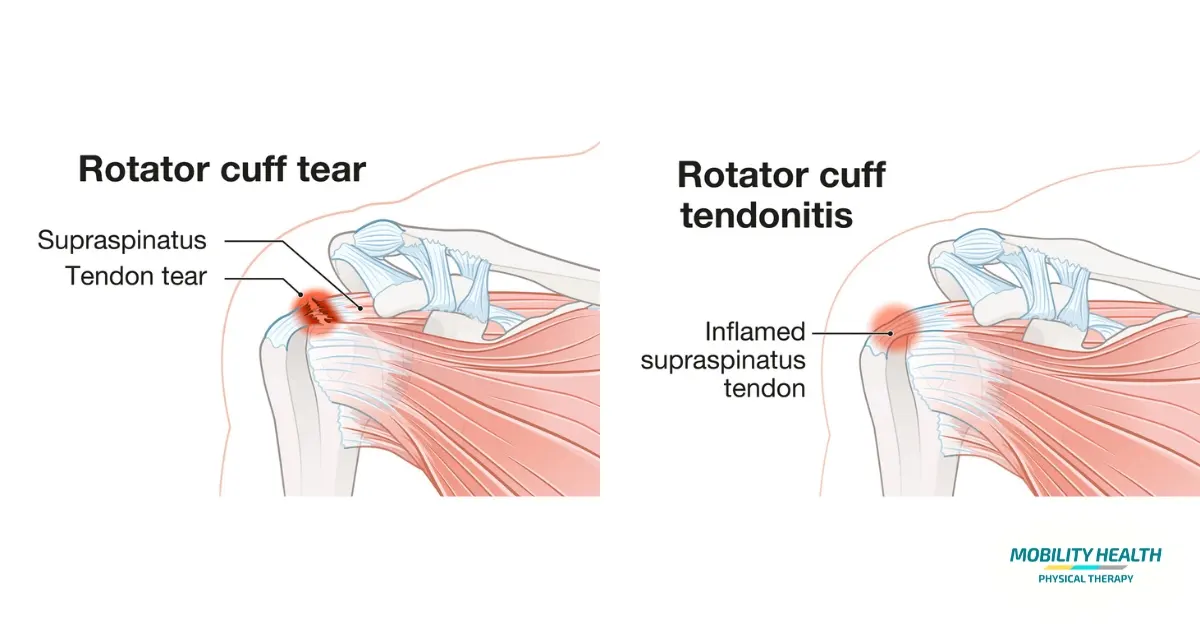
How Can You Tell The Difference Between A Rotator Cuff Tear And Tendinitis?
The pain from rotator cuff tendinitis can be gradual and worsen over time.
It worsens as you continue to use your shoulder joint.
In contrast, when you tear your rotator cuff, usually you’ll feel a sharp, immediate pain and weakness in the shoulder joint.
These are general guidelines, and not foolproof in diagnosing a rotator cuff tear or tendinitis.
If you think you are experiencing either of these conditions it’s best to seek confirmation from a medical professional.
A physical therapist can help diagnose which condition you might be experiencing.
How Did I Get Rotator Cuff Tendinitis?
This condition can be caused by a few things.
It can be caused by weakness and imbalance in the muscles in and around the shoulder.
It can be caused by tightness in the muscles and tissues around the shoulder.
As we mentioned earlier, rotator cuff tendinitis can be common in people who do repetitive arm motions.
This includes repetitive arm motions such as from using a tool or painting.
Repetitive arm motions above the head can lead to this type of injury as well.
Examples of this would be arm motions from swimming or swinging a bat for baseball.
Poor posture can also have an impact on developing this injury.
Specifically, things like leaning over a computer for hours and rounding your shoulders can irritate them.
Finally, sometimes people have bony abnormalities in the shoulder region that can pinch and irritate this nerve.
RELATED ARTICLE: How Physical Therapy Can Help With Poor Posture
Does Physical Therapy Help Rotator Cuff Tendinitis?
Physical therapy can help rotator cuff tendinitis in a number of ways.
Physical therapists are experts on movement, and can help identify how you were injured, and the best ways for your body to heal.
Your physical therapist will first perform an evaluation.
They will speak with you and do some tests to understand your signs, symptoms, and what might be causing your rotator cuff tendinitis.
This could look like asking you to make certain arm movements, and touching different parts of your shoulder to check for inflamed tendons.
Next, they will put together a treatment plan customized to your and your situation.
Below we’ll name and expand on five specific ways that physical therapy can help with rotator cuff tendinitis.

1. Solutions For Pain Management
Your physical therapist will help you manage pain from the injury.
This can look like identifying and helping you avoid movements that further irritate the tendon so you can heal.
Physical therapists can also use hot therapy and cold therapy as well as gentle stretches that can help you manage pain.
2. Soft Tissue Manipulation
Your physical therapist can use soft tissue manipulation such as massage, gentle joint movements, and stretches in your treatment.
This is to help your shoulder and shoulder blade to move together again in harmony.
3. Exercises To Build Strength
Your physical therapist can teach you exercises to build strength.
These will be exercises that work for your specific condition, and can range from lifting weights to using medicine balls.
You’ll receive an exercise program to do at home.
This way, you can continue building strength even after finishing your formal physical therapy program.
4. Exercises To Restore Range Of Motion
Physical therapists can also work with you to restore your range of motion.
The exercises your physical therapist can teach you will help your shoulder and shoulder blade work together properly again.
They can work with you to practice and restore your range of motion so you can go back to doing what you need to.
5. Solutions to Prevent Re-injury
Finally, your physical therapist can provide trusted expert advice to help you avoid re-injury.
This can look like making adjustments in how you perform certain actions.
They might also teach you about ideal sitting, standing, and sleeping positions to alleviate symptoms.
If you’re an athlete, these solutions will be tailored to your specific sport.
Book Your Appointment With Our Manhattan Physical Therapy Clinic Today
Rotator cuff tendinitis doesn’t have to slow you down, but managing it on your own can be difficult and frustrating.
With the right support, it’s possible to reduce pain, improve your range of motion, and get back to doing the things you enjoy.
At Mobility Health Physical Therapy, our experienced team of physical therapists take the time to understand your symptoms and create a plan that actually works for you.
Whether your pain is recent or ongoing, we’re here to help you move more freely and comfortably.
We’ll work closely with you to create a personalized plan tailored to your specific needs and lifestyle.
Spare yourself unnecessary pain by seeking trusted professional help, sooner rather than later.
Book your appointment with Mobility Health Physical Therapy today and take the first step toward lasting relief.