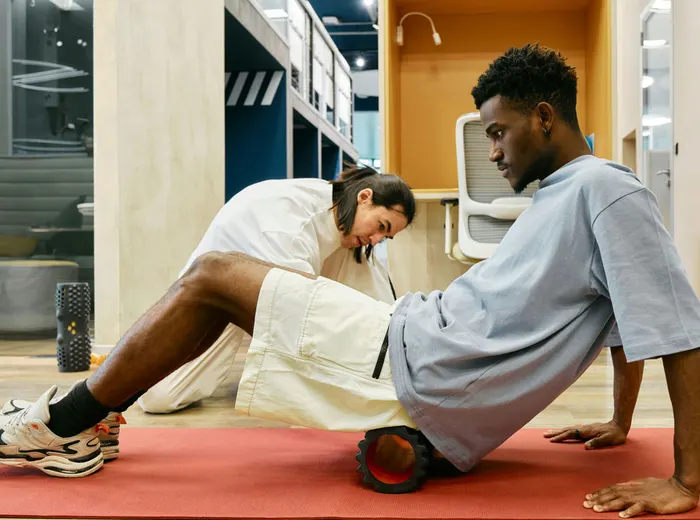
Graston Technique in Bay Ridge, Brooklyn uses specially designed instruments to treat tight muscles, scar tissue and restricted soft tissue as part of a personalized physical therapy plan.

Graston Technique is a form of instrument-assisted soft tissue mobilization, often shortened to IASTM. Your therapist uses smooth, specially shaped tools to glide over the skin and work on the muscles, tendons and fascia underneath. The instruments help your therapist detect areas of restriction and then treat them with controlled strokes. If you have tissue that feels thick, tight or stuck, or scar tissue that limits how you move after an injury or surgery, you may have already tried stretching or massage without lasting change. Graston Technique in Bay Ridge, Brooklyn at Mobility Health offers another way in. It is provided one-on-one by physical therapists on our team trained in Graston and IASTM, and it is always part of a broader plan rather than a standalone fix. Many people are pleasantly surprised by how quick and focused each treatment is.
The instruments let your therapist treat an area efficiently and with precise control over pressure. After treatment, we follow up with stretching and strengthening exercises so the tissue adapts to new movement and load. That combination is what helps the results carry over into daily life. Graston Technique is often used alongside manual therapy, Active Release Techniques and targeted exercise, depending on your evaluation. It is available in our Midtown clinic and through mobile PT at your home or office.
Graston Technique in NYC can help with a range of soft tissue problems. These are some of the most common.
Irritated tendons in the elbow, shoulder, knee, Achilles or foot are common in active people and in those with repetitive jobs. Graston Technique can help address the surrounding soft tissue restriction. We then progress tendon loading with exercise, which is a key part of helping these problems improve and stay improved.
Once a surgical incision or injury has fully healed and your physician agrees, instrument-assisted work can help improve how scar tissue and the surrounding layers move. That can make stretching more comfortable and help you regain range of motion that has been slow to return. We always check the area carefully before starting, and we keep the pressure gentle around newer scars.
Some areas, like the calves, hamstrings, upper back or the outside of the thigh, seem to stay tight no matter what you do. Graston Technique offers a targeted way to work on those tissues. Combined with exercise and changes to how you move, it can help you feel looser and more comfortable.
Graston Technique is quick and focused. Here is how a typical session goes.
Your therapist assesses your movement and symptoms and checks whether instrument-assisted treatment is appropriate for you. We ask about medications, skin sensitivity and medical conditions that might affect how your tissue responds. If Graston is not a good fit, we will use a different approach.
A light lotion is applied to the skin, and your therapist uses the instruments to scan and treat the area with controlled strokes. Treatment of each area usually takes only a few minutes. You may feel pressure or a scraping sensation, and we adjust the intensity to keep it tolerable.
Right after instrument work, we guide you through stretches and exercises for the treated area. This step matters, because it helps your body use the improved mobility. You will also get a simple home program to keep the progress going between sessions. Over time, we reduce instrument work as your tissue and strength improve.
Graston Technique can cause temporary redness, tenderness and sometimes mild bruising in the treated area, which usually fades within a few days. It is not appropriate over open wounds, unhealed incisions or fractures, and may not be suitable if you take blood thinners or have certain vascular, skin or clotting conditions. We screen for these first.

Instrument-assisted soft tissue work that helps ease tightness and restore smoother, easier movement.

Targeted pressure combined with movement to release tight, irritated muscles, tendons and fascia.

How one-on-one physical therapy in Bay Ridge, Brooklyn helps with foot & ankle pain.