
Do your joints feel stiff in the morning?
Maybe you’ve noticed some swelling, pain, or tenderness that just won’t go away.
If this sounds familiar, you might be wondering what’s going on and whether it’s something serious.
These are potential indicators of rheumatoid arthritis, a chronic condition that affects about 1% of people of all ages and interferes with daily life.
The good news?
While rheumatoid arthritis can be frustrating, it’s also manageable, especially with the right support, including physical therapy services.
In this article, we’ll walk you through what rheumatoid arthritis is, what causes it, what the symptoms look like, and how physical therapy can help you stay mobile and live more comfortably.
What Is Rheumatoid Arthritis?
Rheumatoid arthritis is a chronic, inflammatory condition.
It’s a type of autoimmune disease.
An autoimmune disease is a disease where your body’s immune system attacks its own tissues.
In rheumatoid arthritis, the impacted tissues are the soft tissues around the joints.
The affected joints have fluid that builds up in them causing inflammation, pain, and stiffness.
Women are diagnosed with rheumatoid arthritis three times more often than men.
Rheumatoid arthritis can develop at any time in your life.
However, most cases seem to appear in midlife.
Rheumatoid arthritis is the second most common type of arthritis, after osteoarthritis.
RELATED ARTICLE: Physical Therapy For Osteoarthritis
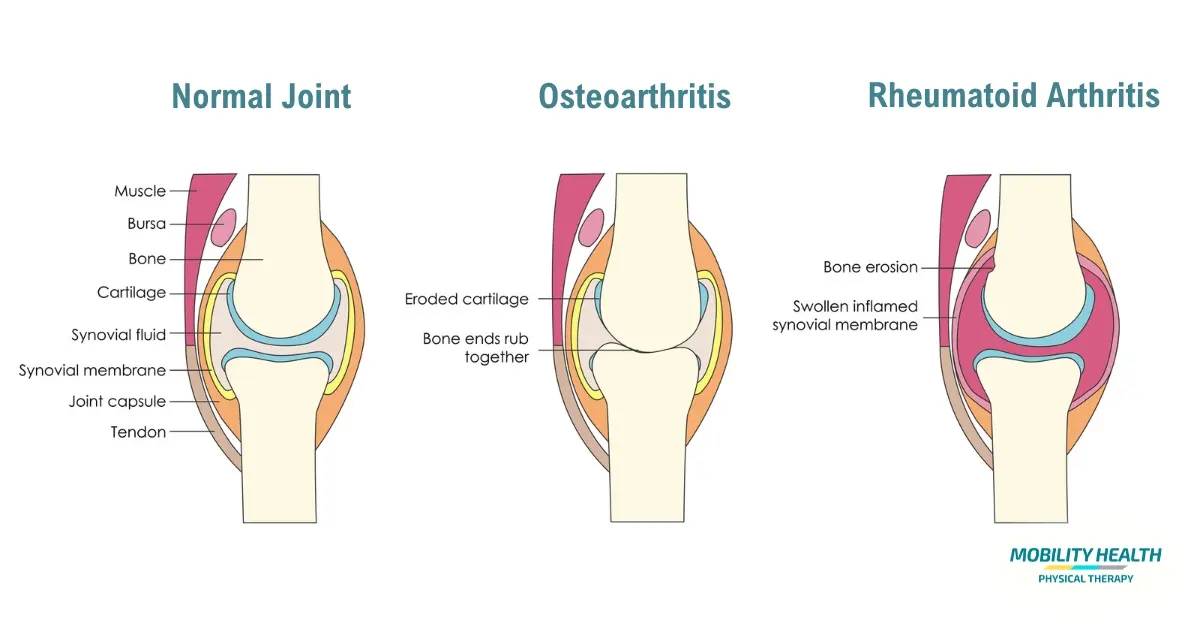
What Are The Effects Of Rheumatoid Arthritis?
Rheumatoid arthritis can cause a variety of symptoms.
Rheumatoid arthritis symptoms can also flare-up and quiet down.
Quieting down is also known as symptoms going in remission.
Some common experiences of people with rheumatoid arthritis include two that we’ve already discussed: stiff joints, especially in the morning, and swollen joints.
Specifically, people with rheumatoid arthritis might have joints that are painful and swollen on both sides of the body.
Often smaller joints are affected first, such as in the fingers.
As time goes on, larger joints like ankles or knees can also be affected.
You might also feel redness, tenderness or warmth in joint areas.
The impact on your joints can also lead to a loss in your joint function or general range of movement.
You might also experience symptoms that aren’t specific to your joints such as:
- Bouts of fatigue
- General discomfort
- Low grade fever
Studies have demonstrated that early diagnosis and treatment is important for managing symptoms and flare-ups.
What Is The Main Cause Of Rheumatoid Arthritis?
As we mentioned above, rheumatoid arthritis is an autoimmune disorder.
That means it’s caused by your immune system mistaking healthy tissue for a pathogen, and attacking it.
Why this happens, we don’t yet know.
Researchers believe it could be a combination of genetics, environmental factors, and hormones.
How Do They Diagnose Rheumatoid Arthritis?
A physical therapist can help recognize the symptoms of rheumatoid arthritis, for example stiffness in your joints.
Your physical therapist can then refer you to a specialist called a rheumatologist for further testing.
Rheumatologists will consider inflammation around the joints, number of joints affected, and blood test results to confirm a diagnosis.
How Can Physical Therapy Help Manage Rheumatoid Arthritis?
Physical therapy can help rheumatoid arthritis in a number of ways.
In fact, physical therapy can be vital to maintaining your quality of life.
This is because physical therapists can help you improve and maintain the function of your joints.
The first thing your physical therapist will do is perform an evaluation.
They’ll talk to you and perform certain tests to evaluate your rheumatoid arthritis and how it’s affecting you.
Next, your physical therapist will put together a customized plan for your care.
This can include a few things, such as:
- Suggesting physical therapy strategies for chronic pain relief
- Creating a personalized exercise plan to help you maintain muscle strength and joint flexibility
- Mobility focused physical therapy solutions to help improve and maintain your general fitness
- Education on how to best build and maintain good health with rheumatoid arthritis
- Lifestyle modification and other injury prevention physical therapy strategies
- Support in developing ways to save your energy so you can maintain your daily activities at home and at work

How Do You Calm A Rheumatoid Arthritis Flare-Up?
When your rheumatoid arthritis flares up it can be painful and stressful.
If you have an increase in inflammation in your joints, leading to pain and swelling, here are a few things you can do.
Avoid foods that can be inflammatory.
Foods high in sugar, or foods fried in oil can increase inflammation.
So, avoiding these foods, and focusing on fruits, vegetables, and foods high in fiber can help.
You can also take over the counter medications for pain, such as acetaminophen or ibuprofen.
Make sure to check with your doctor about how this might affect your other medications.
Something else that can help alleviate the pain is hot and cold therapy.
Heat can ease joint stiffness, and cold can decrease inflammation.
In terms of alleviating fatigue, you can try making sure you establish a good sleep routine, and finding opportunities to save energy.
For example, you can sit instead of standing when brushing your teeth or doing your hair.
Low impact exercise such as walking, tai chi, or water therapy can also help boost your energy levels.
Can I Live A Normal Life With Rheumatoid Arthritis?
There is currently no known cure for rheumatoid arthritis.
However, there are interventions to alleviate pain, inflammation, and impact to your joints.
In other words, rheumatoid arthritis can be challenging to live with, but it can be managed.
The key is early detection.
It’s important to get treatment as soon as you start noticing things like joint stiffness, and addressing it as soon as possible.
Working with a physical therapist is an excellent way to set yourself up for success.
Physical therapists can use their expertise on how bones, muscles, and joints work together to provide the best treatment for your rheumatoid arthritis symptoms.
Book Your Appointment With Our Physical Therapy Clinic Today
Living with rheumatoid arthritis can feel overwhelming, but you don’t have to face it alone.
A physical therapist will provide trusted evidence-based support to manage symptoms, reduce flare-ups, and maintain your quality of life.
Early intervention and consistent care really do make a difference.
If you’re ready to take control of your rheumatoid arthritis, we’re here to help every step of the way.
At Mobility Health Physical Therapy, our experienced team of physical therapists would be happy to put together a personalized treatment plan to manage your rheumatoid arthritis.
They’ll work alongside you to help you achieve a better quality of life.
Book your appointment with Mobility Health Physical Therapy today and start building a better path forward.