Aging is an interesting experience.
With age comes wisdom, insight, and knowledge drawn from your experiences.
It can be a wonderful thing.
But that doesn’t mean it’s always a walk in the park.
For many, an uncomfortable part of aging is developing weird new aches and pains.
They can be hard and frustrating to identify, much less treat.
If you’re developing unexpected pain as you grow older, there are a number of different possible causes.
One of them is a condition called pseudogout.
Pseudogout is formally known as calcium pyrophosphate deposition disease, or CPDD.
It tends to come on suddenly and painfully without identifying characteristics until it’s already flaring up.
The good news is that pseudogout is manageable with help.
No matter what’s causing your pain, physical therapy is an important part of treating it safely and effectively, and pseudogout is no exception.
Here at Mobility Health Physical Therapy, we offer pain management therapy treatments that can help.
In this article, we’ll take a closer look at pseudogout.
What is the main cause of pseudogout?
What is the difference between gout and pseudogout?
What is the best treatment for pseudogout?
And how can a physical therapist help with pseudogout?
For the answers to all these questions and more, keep reading.
What Is Pseudogout?
What we call pseudogout is actually a type of arthritis.
There are more than 100 different types of arthritis.
Osteoarthritis is the most common one, and it’s the one most people are familiar with.
RELATED ARTICLE: Physical Therapy For Osteoarthritis
Pseudogout is more likely to impact adults over 60 years old.
Episodes can last anywhere from a few days to weeks.
Most commonly, the affected joints are the synovial joints, which are affected by repeated motion.
Synovial joints are encased in a fluid-filled cavity, which lubricates them.
Crystals build up in this synovial fluid and cause inflammation.
That’s what triggers pseudogout symptoms.
Some of the most commonly affected joints are the knees, ankles, hips, and wrists.
How Does Pseudogout Make You Feel?
Pseudogout happens suddenly, without prior indicators.
Bouts of pseudogout present with the following symptoms:
- Joint inflammation and pain
- Redness, swelling, and tenderness around affected joints
- Fluid build-up around joints
- Low grade fever
Chronic pseudogout can result in a decreased range of motion over time as cartilage is damaged as well.
What Is Pseudogout Caused by?
Pseudogout is caused by a buildup of calcium pyrophosphate crystals in the body.
Calcium pyrophosphate crystals, or CPP, form in about half of people over the age of 85.
They can occasionally also deposit in the cartilage, where they cause damage.
When they form in the joint fluid, they can cause pseudogout.
Not everyone experiences the symptoms or develop pseudogout with the presence of these crystals, however.
While research still isn’t entirely clear why they form, they are more likely to form as we age.
RELATED ARTICLE: Healthy Aging: Geriatric Physical Therapy For A Fulfilling Life
Contributing factors may include:
- Excess iron in the blood
- Hypercalcemia, an excess of calcium
- Hyperparathyroidism, which is an overactive parathyroid gland
- Hypothyroidism, which is an underactive thyroid
- Magnesium deficiency
- Joint trauma such as injury or surgery
Pseudogout can run in families, so genetics may be a factor in its development.
What Can Mimic Pseudogout?
Pseudogout and gout both occur when crystals build up in your joints.
The difference is in the type of crystals that form.
With pseudogout, calcium pyrophosphate crystals form and inflame the affected joints.
Gout, on the other hand, is caused by uric acid crystals.
Uric acid is a waste byproduct your body creates when it breaks down purines.
Purines are found in certain foods, including sugary foods, organ meats, alcohol, and certain types of seafood and other meats.
Your cells also release uric acid when they die.
But whether it’s gout or pseudogout, the symptoms are similar.
One can be easily mistaken for the other as a result.
Pseudogout can also mimic osteoarthritis or rheumatoid arthritis due to joint damage.
What Is the Most Appropriate Treatment for Pseudogout?
The first step to addressing your pseudogout is an assessment, which we can perform via a physical examination.
Because pseudogout so often mimics other types of arthritis, as covered above, it’s important to rule out other conditions that may be causing your pain.
We can tailor the techniques we use to address it once we’re confident in our assessment.
Depending on where the pseudogout is localized and its severity, appropriate treatments will vary from person to person.
We can help come up with a treatment plan for your specific case.
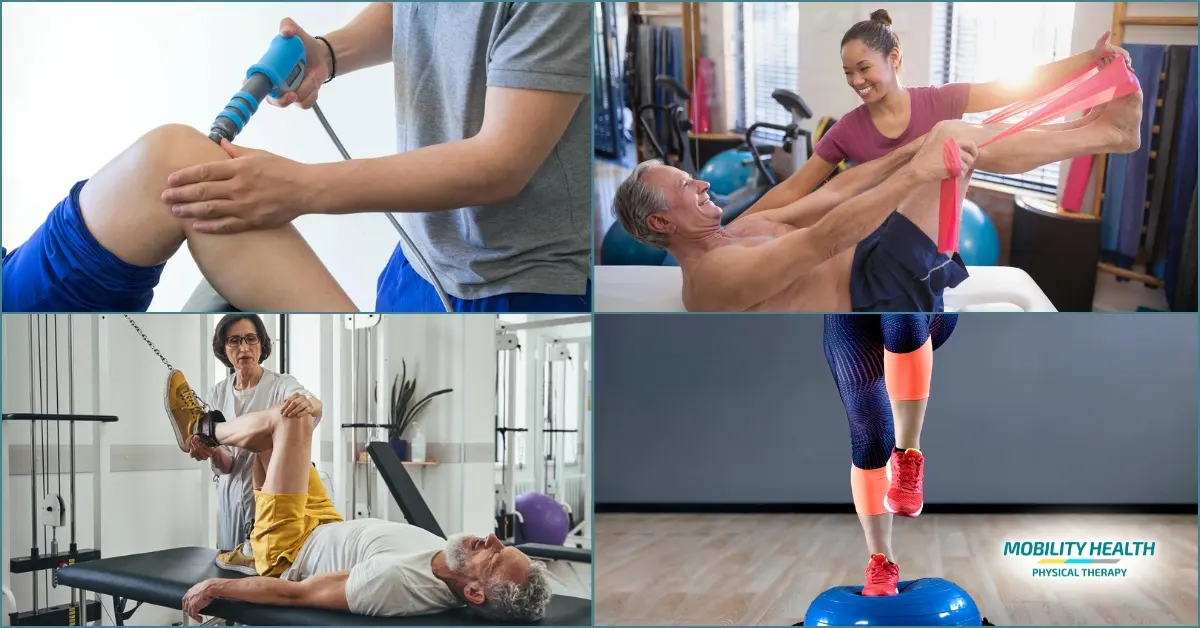
1. Pain Management
Physical therapists will help relieve your pain first and foremost.
We have a variety of techniques we use, such as:
- Heat
- Ice
- Ultrasound
- Electric stimulation
These are to reduce pain and inflammation temporarily.
We cannot prescribe medications, but may have recommendations for safe over the counter nonsteroidal anti-inflammatory drugs you can use.
In order to provide longer term care, we also focus on physical therapy techniques.
2. Strengthening The Affected Area
Pseudogout impacts the joints, which are more easily supported by stronger muscles.
They provide stability and support around the affected areas.
We will develop a targeted exercise plan for you to build a more solid foundation.
Over time, this will alleviate stress on the joints and boost their overall functionality.
3. Improving Range of Motion
Pseudogout wears down your ability to move over time.
Your joints grow stiff and it hurts as you try to move.
We can design exercise and stretching routines designed to help you regain and improve range of motion.
With gentle, controlled movements, you can work on your flexibility and mobility.
4. Maintaining Balance
When pseudogout reoccurs and impacts your mobility, it can potentially stiffen your joints to the point of affecting your balance.
You’re at higher risk of falling in these cases.
We’ll help you practice your coordination and help you with balance.
5. Gait Training
Knees and hips can be affected by pseudogout, and in turn change the way you walk, or your gait.
We assess your walking pattern for abnormalities through gait training exercises.
If your gait pattern has been changed by pseudogout, or puts unusual strain on your joints, pseudogout can be made considerably worse.
We’ll address the abnormalities to improve movement and reduce strain on affected areas.
6. Patient Education
It’s difficult to know how to prevent exacerbating symptoms without proper knowledge.
We will educate you regarding:
- Joint protection techniques
- Body mechanics
- Lifestyle modifications
- Proper use of assistive devices such as braces, splints, or walking aids
- Best over the counter medications to take for pain
Information is your greatest tool in managing your conditions.
Book Your Appointment With Mobility Health Physical Therapy Today
If you’re experiencing sudden joint pain or swelling, don’t ignore it, conditions like pseudogout can escalate without proper care.
With the right physical therapy approach, you can regain comfort, strength, and mobility.
At Mobility Health Physical Therapy, we consider many factors when developing a physical therapy treatment plan for you.
Your overall activity and health conditions are important when it comes to addressing your pain, and we take care to work within your comfort levels.
While pseudogout may require intervention from a rheumatologist, physical therapy is an important component of treatment, one we are qualified to assist with.
Our team of physical therapists in Manhattan will work closely with you to understand the source of your pain and build a personalized treatment plan that supports long-term relief.
You don’t have to manage joint pain alone.
Book your appointment with Mobility Health Physical Therapy today to start your path to joint pain relief.