

Episode Conversation
Health, strength and relationships thriving in the balancing act. I am Dr. Gina Williams, owner of Mobility Health Physical Therapy, a physical therapy company based in Midtown Manhattan. If you live in Manhattan, we can come to your home, or you can come to us in our clinic on West 29th Street. To find more recordings in this podcast, please go to MobilityHealthPT.com. Our special guest is Bryan Winston. I'm so happy to have Bryan here. You guys are in for a treat. Bryan Winston is a New York City-based executive peak performance coach. He helps business leaders to powerfully and confidently move into their new ventures, positions, and projects, as well as optimize their leadership performance and overall satisfaction. He helps coaches and consultants to build profitable, heart-centered businesses.
His clients possess a strong desire to maximize their own personal development and to lead and perform to their highest potential. He believes we are only limited by the bounds of our creativity. Bryan is an IPEC-certified energy leadership coach and ICF ACC, with a bachelor's degree in communication from Rutgers University. A book junkie, having read over thousands of books, probably more, who knows, in areas of leadership, productivity, motivation, metaphysics, philosophy, psychology, psychotherapy, and spirituality. His goal is to optimize life by helping others optimize theirs. He and his wife, Melissa, have lived on the Upper East Side of Manhattan for almost ten years. They have no children and are currently in a heated negotiation about a dog. Welcome to the podcast, Bryan. Thank you so much for being here.
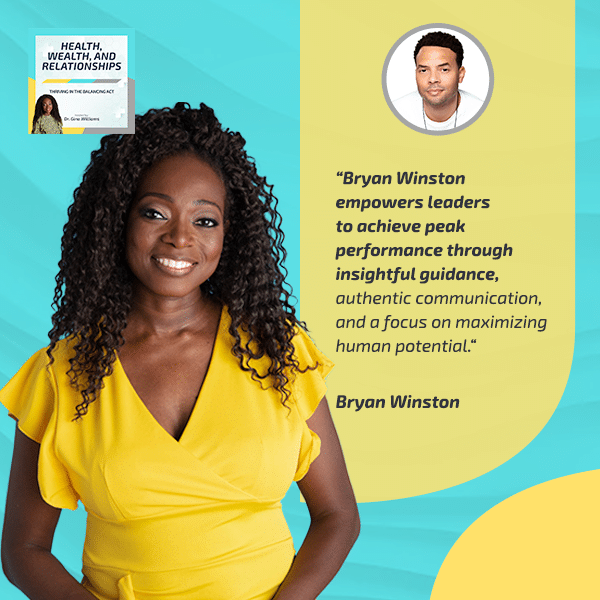
Welcome to the podcast, Bryan. Thank you so much for being here. It's a pleasure to have you. You really take charge and help people like myself, business owners, and leaders find their true selves and become better at business and their personal selves. Thank you so much.
Thanks for having me. I appreciate being here, and I appreciate having our conversation.
Thanks. Tell me what inspired you to become a peak executive coach, and how has your journey shaped your coaching philosophy?
Executive Peak Performance Coaching
A couple of years ago, before the pandemic happened, I was sitting down at a networking event. It was like a breakfast thing this guy pulled together, and I met another coach there. We were talking, and he asked me a question, which I thought was really interesting at the time. He said, “When was your first breakthrough?” I thought it was a really interesting question to ask. Only a coach would ask a question like that. When was your first breakthrough? It brought me back to when I was probably 21 or 22. My sister brought me a book by T.D. Jakes. It was called Maximize the Moment: God's Action Plan For Your Life. It was the first time I had ever read a personal development book.
Just reading the introduction, I want to encourage anyone to read the book, or you can just read the introduction to the book. The introduction really changed my perspective on life. What he talks about is how everyone is born and everyone dies. On your gravestone, there'll be two dates, the date that you were born and the date that you pass away, no longer in your physical form. And there's a dash in between. There's a line in between. That line symbolizes your entire life. That is our responsibility. That line, what happens in that line, is your responsibility. That really inspired me to start to try to answer the question, if that's the case, and I believe that is the case, it resonated with me, what's the best way to move through this life and to live your life?
It started my personal development journey. I started reading all these books, Brian Tracy, Tony Robbins, Wayne Dyer. Down the line, this quest to try to understand, not just to understand, but to live the best life I could. And so I became obsessed with that. I really engaged with that, or called it obsessed, I guess, also with this idea and with this search. I was a personal trainer. I did some modeling work and some acting work in my younger years. Then it came to a point where I just knew I wasn't as interested in personal training as I had once been.
Same thing with acting and modeling. Acting and modeling fell off, and then I was still a personal trainer. I just wasn't finding the same level of fulfillment that I once felt, but I still had this strong curiosity about personal development. Life coach was the first thing that came up for me. I started learning about what it meant to be a life coach. The more that I learned about it, the more excited I got about it. I went and got trained as a life coach. As I started to have conversations, I started to realize that the people who are really wanting to have conversations with me.
First, the conversation I wanted to have was about business and how people were moving forward and what their offering was. Then it started to be more about not only talking about business but also talking to the person who is the leader. I wanted to talk to the person who is the owner. I found that conversation to be the most fulfilling conversation. Executive coach is what I ended up calling myself. What I really do is sit with people who are brilliant. I give them space and time to be able to think through and talk through their own ideas. If need be, I challenge their ideas if we feel as though they're getting in the way. That's been my journey. I hope I answered your question.
That's a great explanation. That's a great purpose. That's a great way to fill in that dash in between our born date and our end date. Definitely, I've heard that term before, but thinking about our life in that way, of like we're in charge, gives us the sense of taking ownership of what we do with that dash in between our lives and making it worthwhile, valuable, enjoyable, fun, and purposeful. I like that answer.
I hope I answered your initial question about how it's informed my coaching, because I guess my coaching was informed by a lot of what I had learned and was learning, and then I learned actually the skill of coaching. I'm not just giving people advice. In a coaching session, if I'm there giving advice to someone, I don't think that's an effective coaching session. An effective coaching is I'm allowing that person who is brilliant the time and the space to really think through and talk through their own ideas and what their challenges are. I may share a story. I may share an insight. I may share something I read or learned or an idea, but I'm rarely giving advice. I'm rarely giving suggestions. I just want to help them to see more clearly. That's my job.
That's important as a business owner and, at many points, a solopreneur, having the space to allow yourself to think and come up with ideas and having someone to help you take a break, think about the business, and pull those ideas out of you. It is essential for progress and making gains in your business and feeling satisfied with your work.
Exactly. My ideas many times sound different in my head than they do when I share them with someone else. There may be an idea I'm having, and I share it with someone, and once I share it with someone, I'm like, “That actually doesn't sound like it's a good idea.” I thought it was, but more the opposite could happen. I'll share an idea with someone, and when I say it out loud, it's like, “That sounds even better than I thought. Matter of fact, I can add on to it.” There is great value in having a safe space to share ideas. We don't want to share ideas with everyone. I don't find that to be the best idea, but many times what will happen is we'll bump up against our own fears and limitations, and they'll be mirrored back to us through that person.
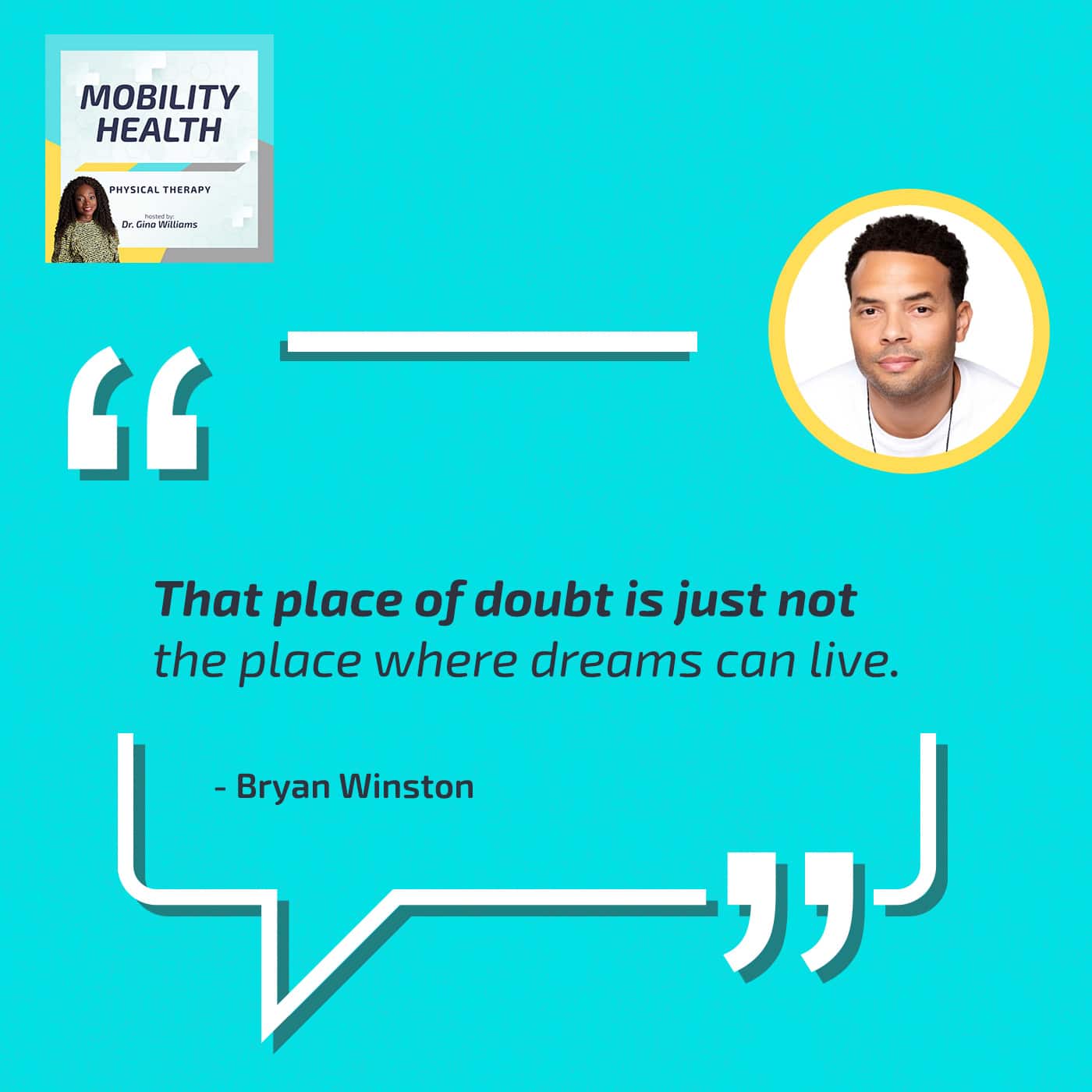
Sometimes, if you ever had a dream or goal, and we've all had the experience where we share a dream or goal, that other person, not trying to hurt you or harm you, will start to share, “Are you sure that'll work? Are you sure that's tough? I heard that business is very difficult. Have you thought about this?” They'll start to share their own challenges with the idea. It will, many times, mirror your own challenges, and that's just not the place where dreams can live, in that place of doubt.
Common Mental Blocks
That's a good point. It leads me to my next question. When you're working with high-achieving elite leaders who want to reach the next level, what do you see as the most common mental block and habits that keep people from realizing their own potential?
They believe what they think is true. I think that's the main blocker to many of us. Just because you believe it doesn’t mean it’s true. If we're not willing to be open-minded and consider new ideas, especially in the face of challenges, if your life is going well, your business is going perfectly, and you're completely happy with the way things are, and you have some ideas and some beliefs, fine. It seems like those ideas and beliefs are working for you. You have every right to hold on to them. But if you're facing challenges, if you're not happy with the way your life is going, and you have beliefs and thoughts that you believe are true, and your paradigm of life you're holding on to, then we have a problem.
The main mental blocker for many of us is believing what we think is true.
If you're having a problem, there's something that you're believing that's not true. There's something you're out of alignment with. The biggest challenge is starting to say, being able to be humble and say, “There's something I'm not seeing. There's something I don't understand. There's something that's off. Something about the truth that I'm not in alignment with,” and being humble enough to say, “What is it?” and being able to challenge and question your own ideas and beliefs.
Being able to face that and tease out how to transition and change that.
There are other challenges, too, that come along. That's like a deeper challenge. That's like the human challenge and the human problem. But specifically with people who lead, many times leaders are put in leadership, either choose leadership, or are encouraged into leadership because they're really good individual performers. They do really well in sales, so they become a sales manager. They do really well as a solo, so they decide to grow a team or they gradually grow a team. The skills that they have as a solo, although they could translate into good skills or principles as a leader, don't always do that.
It's not always that clear because not only are you the practitioner and responsible for your own performance, you're also responsible for the performance of others. That's leadership. Many times, there's a skill gap between the two. That's another big challenge that I see, the challenge of going from a solo to a CEO. This is the challenge, and all the delegating, having a clear vision, being able to share that vision, and being able to give constructive feedback and have tough conversations. All those things start to be involved with that.
A lot of moving parts sometimes we don't think about until we're there and not sure how to get everything moving in sync. When we were that solo practitioner, when we were only in sales and not the sales manager, that's a great point. Tell me, how does your background in communication influence the way you coach on effectively sharing the vision or the goals that the person may have of their own?
Communication And Coaching
If you're talking about my college degree, I couldn't even tell you. I don't even know, what did I even learn? How to drink. How to get rid of worries and stuff like that, like from college. The main thing that was different than what I thought it would be is I thought we were just going to learn how to help people set goals. I thought we'd learn to teach people how to set goals and teach people how to stay out of the way of procrastination. I thought we would learn more success tools, but the main thing that we really learned was about listening. We really learned what effective listening was. Many of us, I remember when we first were being trained, they wanted to get this thing where we felt like we had to give advice.
There's a book called The Advice Trap: Be Humble, Stay Curious & Change the Way You Lead Forever, where someone comes to you with a problem and you immediately want to go jump into giving them advice. What they wanted to train us to do was to stop and really just listen, ask questions, and be curious. That was actually more valuable than any advice that you can give, because what happens is if we listen and ask questions, then that person starts to be able to listen to themselves, really hear themselves, and start to reflect. That's actually more valuable. It can be more valuable than me telling you what to do. The whole thing about listening and then being able to share what you're hearing is really a helpful skill. That's what I hear.
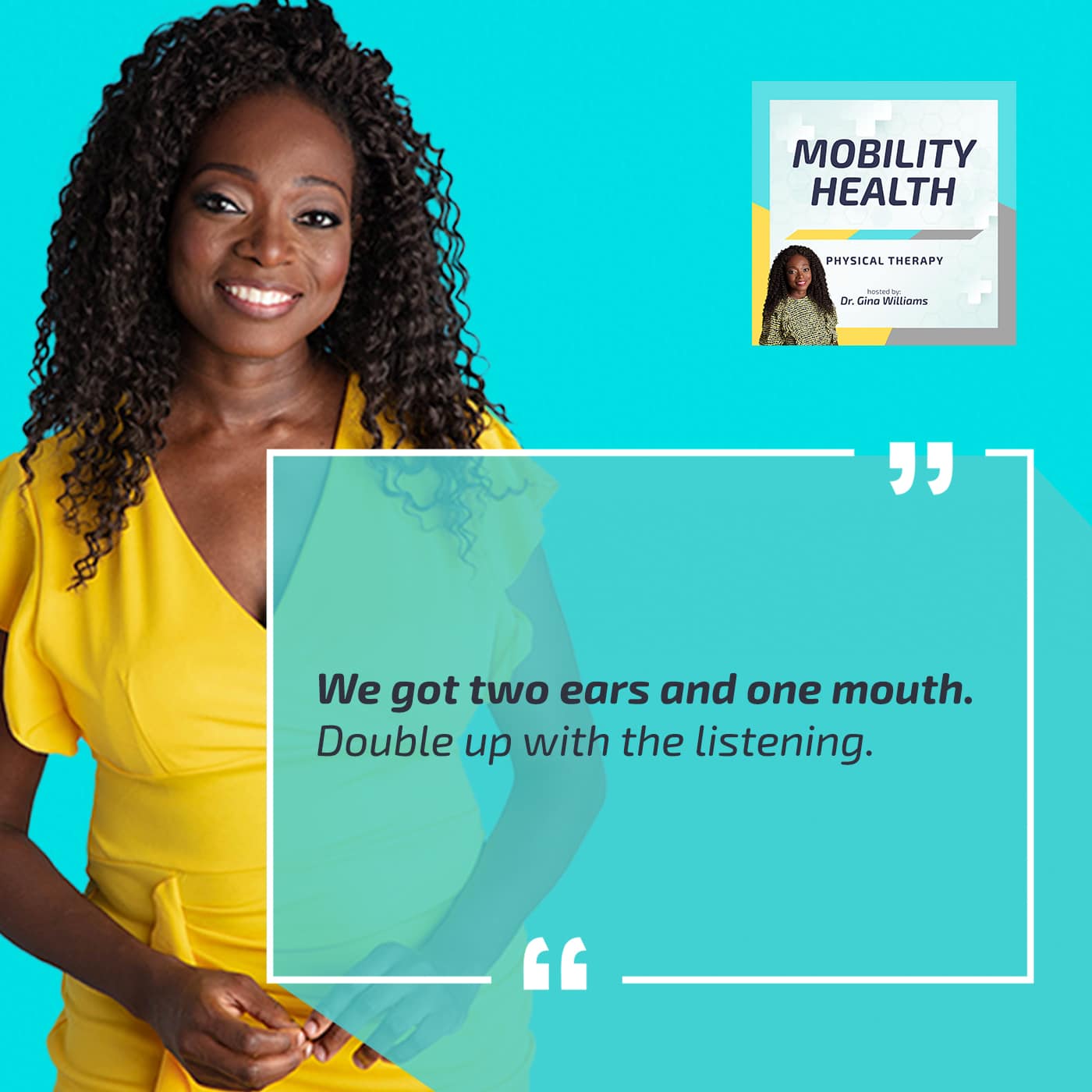
That makes sense. We've got two ears and one mouth, double up on the listening.
I mind you, there is a place and time where it's important for me to share what I see. I see something really clearly, and I don't think they're really seeing it. It's important for me to be able to share that in a way that really lands, so they can understand. Before I do that, I have to really close my mouth and open my ears, not just to what's being said but also to what's not being said. At the same time, I listen to what I'm hearing inside myself. You want to keep an eye and an ear on yourself. What are you hearing? That's something that I found to be really helpful, what I learned about communication.
Balancing Professional And Personal Well-Being
Very insightful. Many people, especially high performers, struggle with balancing professional and personal well-being. What strategies would you suggest for leaders to find harmony in their lives?
To know what's important for you, to really sit with what your true values are. If you have a family and you find that family to be important, it'll serve you well to make your family a priority. These are simple things, just simply what I'm saying. It sounds simple, but in practice, it's a little more difficult. If your health is important for you, I hate using the word should, but it should be important for you on your own health, then that has to be a priority. Prioritizing, so finding time to prioritize. I think the main thing is prioritizing. In order to prioritize, we have to know what we want. We have to know the answer to the question, “What do you want?”
In order to prioritize, we have to know what we want.
Most people, I don't know about you, but as an adult, I don't get asked that question very often. As a child, I was asked it, not all the time, but pretty consistently. Christmas, what do you want? Your birthday, what do you want? We're going out, what do you guys want for dinner? You were asked what you want, but as an adult, that question falls away. People don't really ask that question. I think we fall out of practice with being able to clearly answer it. Most adults will say, if you ask people to try it out for yourself, let’s just try it out for yourself, ask someone, a friend or a colleague or a family member, what do you really want most? What’s going to happen? What will happen is a couple of things will happen. Either, one, they’ll be very clear with what they want, “I want to make $1.5 million a year,” because that’s one thing that could happen, but it’s rare.
The next thing that will happen is they’ll say, “I’m not really sure what I want. To be honest with you, I’m not really sure what I want.” The thing that will most likely happen is they’ll start to tell you all the things they do not want, “I don’t want to be broke anymore. I want to get rid of it. I don’t want to have to pay this mortgage anymore. I don’t want to be lonely anymore. I’m fat. I don’t want to be fat anymore.” These are the things that will come up. What I would say is, to answer your question, to give you a really long-winded answer, is to be very clear with what your values are and be very clear on exactly what you want. That’ll help you to start to maintain more of the balance that you want in your life because you’ll know your priorities, and you’ll know if you’re on track or if you’re off track based upon that.
That makes sense. Bringing back that inner child of being able to think about what we want and express it and share it and work towards it. Very important.
As a physical therapist, you have people come into your office from all walks of life. What do you think is the biggest challenge that you face when you’re talking with people? Because I’m sure you deal with people who are attorneys and leaders.
Clients are often surprised the first day that they’re in because their knee’s hurting them. They strained their knee somehow, running or whatever the mechanism, but I ask them, why do they want the knee pain to go away? What is their why? It hurts, and you want the pain to go away, but what are the things that you need to do with your body after physical therapy? That really helps me set goals for the exercises and treatment that they’ll be doing for the next two to three months. They’re really taken aback and surprised that I want to know those things.
It’s not because I’m nosy. It’s because if you have to bend down to pick up your grandkids, or if you’re running 100 miles a week, you are using your body in that way. That really helps me picture how I can help you. They’re really surprised by me wanting to know all the physical things that they do instead of just curing their knee pain, because that’s not how it works.
You use your curiosity. We use the interesting word, you use the word nosy. I’m not being mean. My wife and I have a thing. Anytime I feel like I’m being curious, she’s like, “Thanks, I’m being nosy.” I have a question for you. I’d be curious to hear what your answer is what’s the difference between curious and nosy?
Curious seems to have an innocent term around it to say, “I just want to know just because it piqued my interest. I have questions about what you’re saying or talking about.” Nosy, to me, seems like, “I just want to be in your business and just know, with no value to add. I just want to know.”
Curiosity has more to do with this innocence to it, and you’re asking because you want to maybe help. Whereas nosy is just, “I want to know because I want to be entertained by your life.” Good.
That’s the way, that’s my definition. That’s the way I think of it.
I would agree with that. That sounds about right.
Heart-Centered Business
Bryan, you talk about a heart-centered business. How do you help coaches and consultants balance profitability with authenticity?
I think they’re the same thing. I think things become difficult in sales and leadership. Let’s talk about sales. I think things become difficult with sales once I make it about me getting something from somebody. I think that’s for me. That’s what I’ve seen in myself. That’s what I’ve seen in people I work with, when you make the sale about something, “I’m going to get this person’s money.” That’s what it is, “I’m going to get their money.” With that kind of feeling, if you go into a situation or go into a conversation with the idea that you’re going to get something from somebody, it makes it really difficult because that person feels that. We’ve all been around people who are creepy. They have creepy intentions. We get a sense, they haven’t said anything, maybe they haven’t even said anything, but it’s just a way that they are. They’re just like, “I don’t know, I don’t like being around that person.”
Things become difficult with sales once you make it about you getting something from somebody.
You’re not genuine about things.
If I come into contact with someone, let’s say in a networking capacity, and they just have this thing where I feel like they want something from me, then it makes it very difficult for them actually to get what they want because I’m already on guard. There’s a coach named Steve Chandler who I look up to. He’s known as like the godfather of coaching. One of the things he teaches is that needy is creepy.
It is.
It’s the way that he says, “Stalking is a crime because needy is creepy. You get locked up for that.”
Hold on one second, Bryan. Baby boy is sick.
I’m sorry. Is everything OK?
He’s got a cold. It turns on his last day. It usually runs about six days. Today is day six. He’s home hanging out with us.
I hope he heals gracefully.
He’s a strong boy. I’m so lucky.
Even you just saying that is actually more helpful than you may even know. To say, “He’s a strong boy.” For him to hear that and for you to say that is actually healing from what I’ve learned. Many times, when we have someone who’s not feeling well around us, we tend to pity them, like, “He’s feeling bad. I feel bad for him.” That’s one of the things that many people, you hear people say, “I feel bad for that person.” It’s not really helping that person for you to feel bad for them. For you to say, “He’s strong.” Many times, when someone’s not feeling well or someone doesn’t like feeling well, I tend to say, “I hope they heal quickly and gracefully.” I want to speak favor over people.
That makes sense. Positive energy. There are many scientific studies that show that positivity around something literally makes things better.
It heals plants. They’ve done studies of plants where they have people curse at plants, and the plants die. There are people that praise plants, and plants grow and flourish. If that can happen with a plant, imagine what could happen with a child. I was heartbroken the other day. I was walking down the street, and I don’t know where this woman had come from or what had happened the other day, but she was really berating this three-year-old child, like yelling. It hurt my heart to see that because I can only imagine. Again, I don’t know where she’s come from. I don’t know what that child did or said.
I don’t know what happened that day. I don’t mean to judge her, but it hurt my heart to see that because with her berating this child, it’s just like that plant. If you go, there’s a plant in our house, which my wife, I don’t want to curse the plant, but it’s had better days, I’ll say. Anytime I make reference to my wife, it’s like, “Let’s not talk about it. I want it to grow. I want it to flourish.” So that can happen with a plant. Imagine what could happen with a child. Imagine what could happen with a coworker, an older person in my life, or a spouse. If we’re speaking poorly of them and if we have that energy.
That's a good point.
At any moment, you curse or you bless. With anything you say, you can curse or you can bless. That’s the opportunity that we have, to curse or bless. We want to invest our time in blessing because the other piece of it is that you really bless yourself. It’s not even about the other person. The words you speak either curse or bless you.
That's true.
I'm happy to hear that your son is feeling better.
Thank you, Bryan.
Be strong and growing.
In reference to you, I heard that you and your wife are in heated conversations about getting a dog. Do you guys have a dog yet?
We're not getting a dog. I don't know why you're saying that.
I'm guessing Melissa wants a dog, not you.
We have a two-and-a-half-year-old daughter. She is more than enough to keep our hands full.
Wonderful. Blessing.
She's sleeping. She's taking early naps. I heard her crying and carrying on.
When they get tired, they need their naps. They get like they need a Snickers bar. That's what I say. I just turned three, two-year-old when she was two. She had a Snickers bar when she gets her nap. She's fine.
I was on a call this morning, and I heard crying, and I came out. My wife said, "She's feeling cranky." I went in there, and she's laying on the bed. She's like, “We don't give her a pacifier, but when she goes to sleep in the bed, we give her a pacifier.” She's sitting there with her pacifier. I laid down with her. She fell asleep. It’s like the greatest thing ever. It’s the best thing.
That's nice.
How old is your son?
He is five months. He's a newborn. His sister, they had their first cold at three months. He's healthier and he's vibrant because he's got a lot more exposure.
We've had quite a few bouts with a few different ailments over the past two and a half. I remember one time we all got pinkeye. My wife blames that on me. I don't think it's something not to share. We've had colds together. We've shared quite a few ailments in this house, but we came out on top. They say you've survived 100% of your toughest challenges.
That is a true statement.
That's the truth.
Thank you so much, Bryan, for coming to the podcast. If anyone's looking to hear more of this podcast, please go to MobilityHealthPT.com. Thank you, Bryan. It's a pleasure.
It's an absolute pleasure. Thanks for having me on.
You're welcome.