Most of us grow up hearing how important strong bones are — drink your milk, get enough calcium, and stay active.
But once we reach adulthood and our bones stop growing, bone health often slips to the back of our minds.
After all, bone loss isn’t something you can feel right away.
The truth is, after your bone density peaks in your 30s, it naturally becomes harder for your body to rebuild bone at the same rate.
Over time, this can lead to osteopenia — a condition marked by lower-than-normal bone density that can increase your risk for fractures if left unaddressed.
The good news is that osteopenia doesn’t have to progress to osteoporosis.
With early awareness and the right support, including targeted physical therapy, you can take meaningful steps to protect your bones, stay active, and maintain your independence.
In this article, we’ll break down what osteopenia is, how it’s diagnosed, what causes it, and how physical therapy can help slow bone loss and support stronger, healthier movement as you age.
Let’s start by taking a closer look at what osteopenia actually is.
What Is Osteopenia?
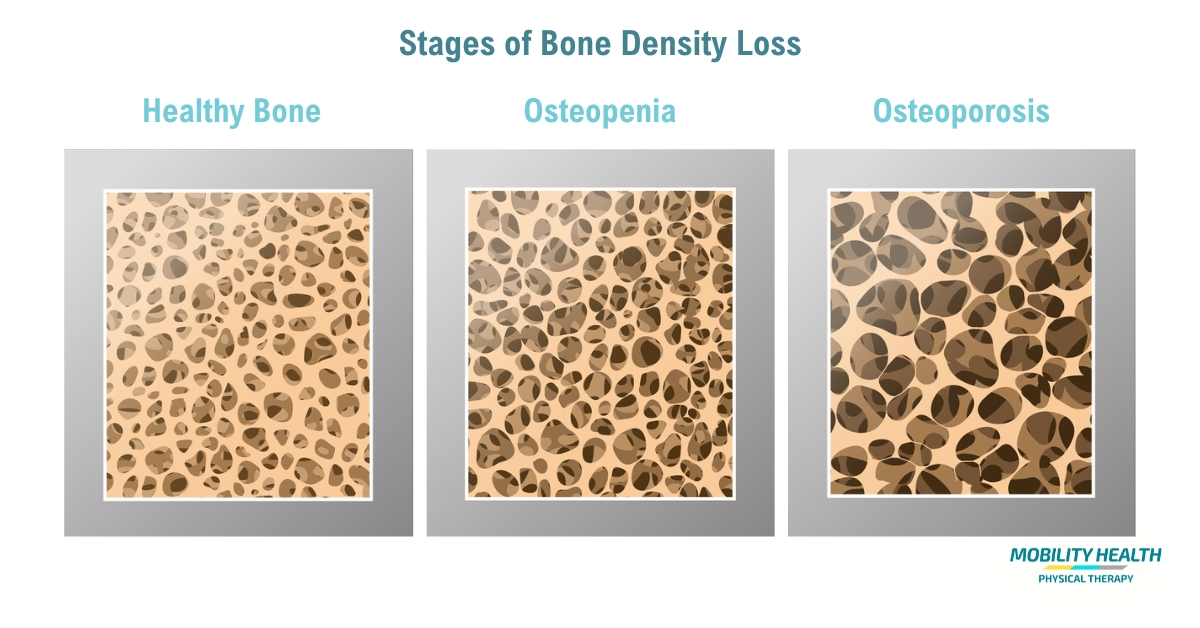
Osteopenia is a condition characterized by below average bone mineral density.
You’re more likely to develop this condition after the age of 35, and it is possible for this condition to progress to osteoporosis.
Osteoporosis is when you have low bone mineral density due to altered bone microstructure, which can put you at a greater risk of fractures even during low impact activities.
If your osteopenia does develop into osteoporosis, physical therapy can help.
But it doesn’t have to.
With the right support, including from physical therapy, you can prevent your osteopenia from developing further.
But more on that later.
The good news is that osteopenia is preventable, but we’ll dive more into that later.
RELATED ARTICLE: Managing Osteoporosis With Physical Therapy: A Complete Guide
How To Tell If You Have Osteopenia
Osteopenia is a sneaky condition that doesn’t usually create any noticeable symptoms.
Less than normal bone density doesn’t create pain.
But there are some signs that can point to bone loss.
Some are more obvious.
For example, if you lose more than 1.5 inches of height, your spine may be collapsing.
A less pronounced sign might be that your upper back is rounding and pushing your head forward.
This can happen due to changes in the shape of your spinal bones due to bone loss.
The clearest sign of low bone density is breaking a bone with minimal impact.
However, this is more likely to happen if you have developed osteoporosis, not osteopenia.
That’s why it’s important to see your doctor for regular checkups.
They can spot osteopenia before it gets worse.
What Is The Main Cause Of Osteopenia?
After the age of 30, your body tends to break down old bones faster than it can build new ones.
This is a natural process, and is what happens when you lose bone density and develop osteopenia.
However, certain factors can increase your risk of developing osteopenia — one of the most significant being a deficiency in calcium and vitamin D.
Some examples include:
- Being older than 50
- Being female
- Experiencing menopause before the age of 45
- Not exercising
- Being a heavy smoker
- Being a heavy drinker of alcohol
Some pre-existing conditions or disorders that can increase your risk of developing osteopenia include:
- Anorexia
- Cushing syndrome
- Hyperthyroidism
- Diabetes
- Celiac disease
- Bulimia
RELATED ARTICLE: Managing Type 2 Diabetes With Physical Therapy: What You Need To Know
Should I Be Worried If I Have Osteopenia?
While developing osteopenia can be worrying, the good news is that it can be slowed, and in some cases even reversed.
You can work with your physical therapist to identify what elements of your life put you more at risk, and address the ones you can.
With the right care, you can prevent your osteopenia from developing into osteoporosis.
As well, in some cases osteopenia can be reversed.
What Should You Not Do If You Have Osteopenia?
There are a number of risk factors for developing osteopenia.
We have no control over some of them, like your age or when you experience menopause.
But with others, we can.
If you have osteopenia, it’s important to avoid alcohol and tobacco as much as possible.
These can contribute to worsening osteopenia.
As well, if you’re taking steroids to help control inflammation with diseases like rheumatoid arthritis, talk to your doctor about changing your dose.
This may help manage your osteopenia as well.
Can You Have Osteopenia And Never Get Osteoporosis
Yes, you can have osteopenia and never get osteoporosis if you adopt a treatment plan that maintains your bone density.
Diet and exercise are major components of this.
If your calcium or vitamin D is low, you can try a supplement to help with that.
Although remember, it’s usually better to get enough vitamins and minerals from your diet for optimal absorption.
Vitamin D rich foods include fortified eggs, fatty fish, and mushrooms.
Some great options to boost your calcium include white beans, broccoli, cress, and dairy products.
Speak to a nutritionist or dietitian for more detailed advice on this, however.
Since we’re a physical therapy clinic, we can only provide general information in that area.
However, there’s another area where we’re much more qualified to help you avoid osteoporosis – exercise.
If you haven’t been active before, consider working with a physical therapist to get you started on a treatment plan that safely gets you moving.
Let’s explain more about what this looks like.
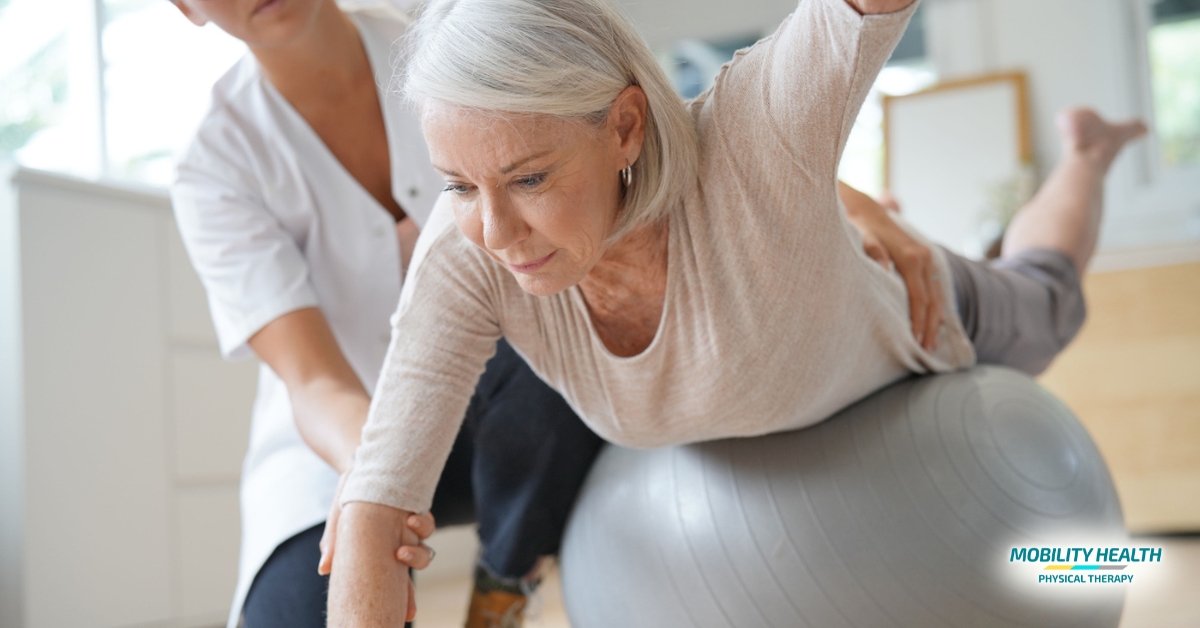
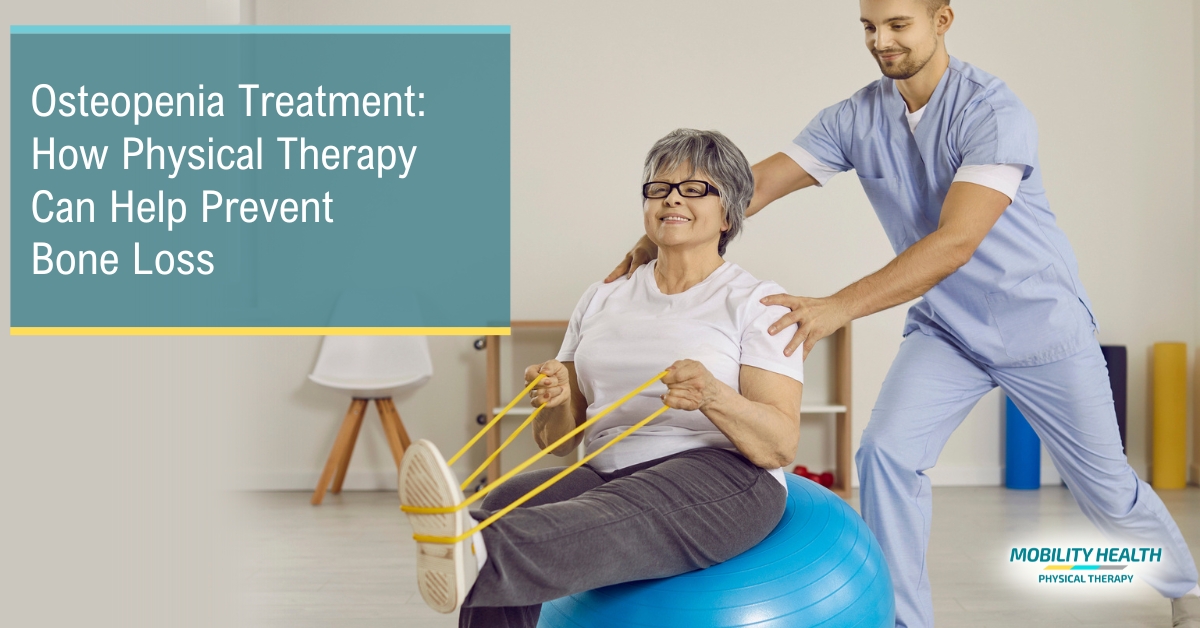
How Physical Therapy Can Help Treat Osteopenia
The goal of your physical therapy is to help you prevent your bone density from decreasing.
First your physical therapist will conduct a thorough evaluation to understand your physical strength and weaknesses, family history, medical history, medication, diet, and even hormonal history.
This way, they can create a custom treatment plan with specific exercises designed to build muscle and maintain your bones.
Some examples of exercises that might recommend to you are:
- Balance training
- Leg strengthening
- Hip stretches
- Spine stretches
- Posture guidance
If your preference is to participate in an activity instead of just completing exercises, there are some great options for you to consider.
For example, your physical therapist may recommend dancing, tai chi, running, or racket sports.
The focus here is on weight bearing exercises that can be done safely.
And remember to always check with your physical therapist before doing an activity to ensure it doesn’t increase your risk of injury.
For instance, yoga and Pilates contain movements that may increase fracture risk if you have either osteoporosis or osteopenia.
So if your bone density is low, it’s a good idea to try and avoid them.
Over time, your physical therapist will continue to add to your program in order to help you improve.
Book Your Appointment With Our Physical Therapy Clinic Today
Being diagnosed with osteopenia can feel concerning, but it’s also an opportunity to take action before more serious bone loss occurs.
With the right combination of movement, strength training, and balance-focused exercises, physical therapy can help slow or even reverse declining bone density.
A personalized program not only supports healthier bones, but also can reduce your risk of falls and fractures as you age.
The earlier you address osteopenia, the more control you have over your long-term bone health.
At Mobility Health Physical Therapy, our team of physical therapists will work with you to create a safe, effective plan tailored to your body and lifestyle.
Book your appointment with Mobility Health Physical Therapy today and take an active step toward stronger bones and confident movement.