

Episode Conversation
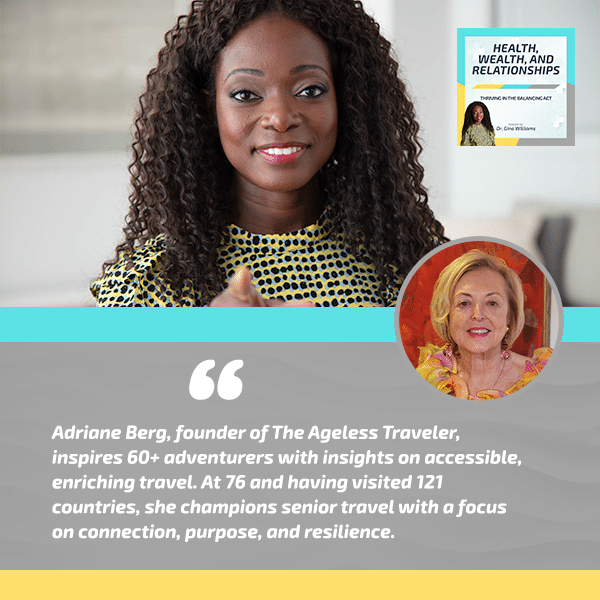
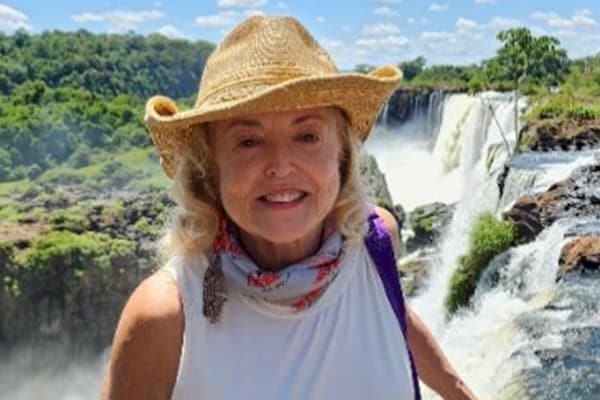
Our guest is Adriane Berg. Through her groundbreaking media platform, The Ageless Traveler, Adriane empowers 60-plus travelers to embark on transformative journeys filled with connection, discovery, and purpose. Adriane, at 76, has visited 121 countries and has been named a New York Times Age Boom Fellow.
The Ageless Traveler podcast and blog cover solo travel, women's adventuring, grandparent travel, volunteering, financial barriers to travel, and unique topics such as caregiving travel, multi-mobility challenges, and the complexities of traveling with mind, cognitive, and physical impairments. Her content highlights age-friendly destinations and celebrates the resilience and vitality of older travelers while advocating for their unique needs. Adriane is also the host and creator of the mature market award-winning podcast Generation Bold - The Fountain of Truth About Aging and the United Nations podcast On The Ground. Her publications include The Caregiver's Travel Guide and Luxury Travel For Less. Both are offered free to all.
In collaboration with the World Tourism Network, Adriane is incentivizing the tourism industry to embrace the diversity and vitality of older travelers by offering the first Ageless Tourism Recognition Award. The Silver Economic Market nominated her for the Fighting Isolation Award in September 2024.
The Ageless Traveler
In 2025, Adriane will keynote at the HFN Expo on Travel, Tech, and Isolation. Adriane’s advocacy includes being a representative to the United Nations from the International Federation of Aging, a board member of the UN’s global NGO executive committee, and a member of the NGO Committee on Aging at the forefront of advocating for a treaty on the human rights for older adults a crucial endeavor in this aging population. Welcome to the show, Adriane. Thank you so much for being here.
Thank you very much. I’m delighted to be here. Anytime I get to spread the word about healthy travel and lifelong travel and lifelong travel made easy and what it does for us as we age, I'm always happy to be there.
Thank you. For people reading, where can they find you on social media online if they are looking for more information about travel?
It's very easy. Simply go to AgelessTraveler.com. We put all of our podcasts there. We are a weekly podcast. If you are on Apple, Spotify or any other podcast disseminator, take a look at The Ageless Traveler. If you are a caregiver and you want a free book on traveling with the care recipient or on your own, it's The Caregiver’s Travel Guide at CaregiversTravelGuide.com or LuxuryTravelForLess.info because we do want the public to be able to travel and when knocking down those barriers.
We know the two of them are money and another one is that we have responsibilities as caregivers and sometimes we can't travel or we'd like to travel with a care recipient and this helps you. You will get all the information you need including our articles and wonderful videos too on AgelessTraveler.com. We also have a YouTube channel. Anybody that we interview on our audio podcast, we get very personal with them. We do some in-depth and private interviews but we let you see them on the Ageless Traveler YouTube Channel. Remember Ageless Traveler and you are in.
Easy to remember. Adriane, you have created a unique platform with The Ageless Traveler to empower old adults through travel. Can you share what inspired you to focus on the 60-plus community and their journey?
First, I focused on travel. I love to travel. I have traveled since I was eleven years old, and I have traveled in very bad circumstances. My father died when I was eleven. Very rapidly. He had a stroke and hemorrhage. You talk about health all the time. He was very unhealthy, but we were not prepared. He was very young. I had a personal depression over this and my mother's remedy in those days was not pills, not therapy, but to send me to an exciting summer. He had died in June, and by July, I was on the airplane. That airplane took me to four countries, and I was never depressed again.
The idea of the bigness of the world was brought home to me. As I got older, I became an elder law attorney, which I was for 40 years, I began to study issues of aging, and as you said, I created a podcast called Generation Bold - The Fountain of Truth About Aging. I learned about aging. I was aging, my friends were aging, and my husband was aging. I realized that depression and isolation can set in or like many women who are retired, we can want more fun. Girls just want to have fun and travel is an answer to the fun.
Travel was an answer to multi-mobility. When one person, a friend, a spouse, or a life partner is an aspiration as you are, we all age differently, how could we go on these trips together anyway? If we do lose our buddies for one reason or another, how can we make new ones? Travel is an answer to all of these things, as well as finding life purpose and voluntouring, and around the world and sharing our skills.
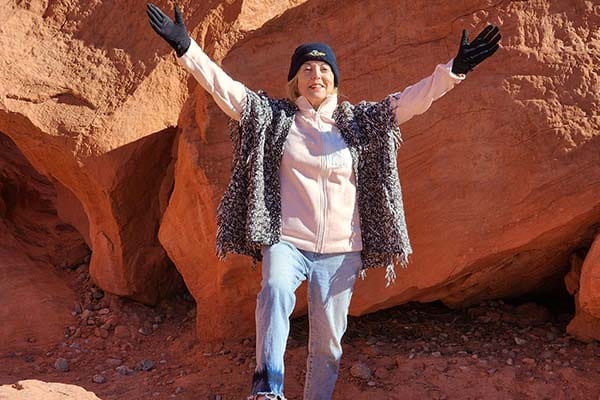
I thought, “I’m going to give myself a present.” When I was 75, I started The Ageless Traveler. Remember, I have been doing podcasting for decades on aging per se. This is about travel and aging and it took off. It took off to the extent that we now have an institute called Ageless Tourism and it's for the tourism industry to cater to us better and to do more looking into how ageist they may be. It's been quite a run. I didn't expect it to be this big within a year. I came back from Cannes. We were up for an award on solo travel. We were nominated for another award. I’m fascinated by how important this was, and it was a gift to myself from when I hit 75.
You have traveled to over 121 countries. How do you believe travel transforms one's perspective on aging and vitality?
It is proven. It's not how I believe and what I think. I put a package together for cruise ships and I did a lot of research. The NIH, which is the National Institute of Health in the UK, and the NIA, which is the National Institute on Aging in the US, have done studies. Their studies show that one of the big problems of being older is that you become incompetent. You become incompetent because people think you are incompetent.
They use the word self-imposed helplessness. People think you can't do something, so after a while, you stop doing it. You either lose the skill or you ask other people to do it. They study people who travel. They discovered that those people do not have that problem because travel requires so much autonomy and it requires so much of you doing something for yourself.
Even if you are on a cruise, you have to get those bags out by midnight, and you have to get to the station. Even the easiest of travel requires you to make decisions about packing and getting out on time. That alone changes people's self-image. In addition to the fact that you are seeing the world, you see how big the world is, and you ignite your curiosity, which is a big part of staying healthy as you age, you are actually doing something neurologically. The world is forcing you to take care of yourself and so you take care of yourself better. I was fascinated by that.
Travel is not just about seeing the world. It ignites your curiosity and keeps you healthy as you age.
Traveling is a good way to exercise our physical and mental body.
If you are an independent traveler, you have to find places yourself. You have to read the GPS. You have to use technology. You have to learn babbles so that you can translate what the Uber driver is saying in Greece. You have all these things that you have to do. You have to book your tours online. There's a lot of tech involved in travel now. It sneaks up and is a wonderful way of taking care of all of these things at once. Not to mention the fact that if you are a good sightseer, you will probably do a lot of walking.
There are a lot of health retreats and medical tourism. These things are directly related to the health of a lot of people. People will have a bucket list. They want to climb Mount Kilimanjaro or they want to walk El Camino. I was very surprised when I saw that the one podcast that got the most listens of my Ageless Traveler was how to walk El Camino, which is a pilgrimage. It goes to Spain, France, and Portugal and it’s 600 miles. How many people were interested in walking that? Fascinating stuff.
Travel Challenges
It's doable no matter what your abilities are. You work to address unique traveling challenges for older adults, including physical limitations and cognitive limitations. What advice do you give to those navigating travel with these types of challenges?
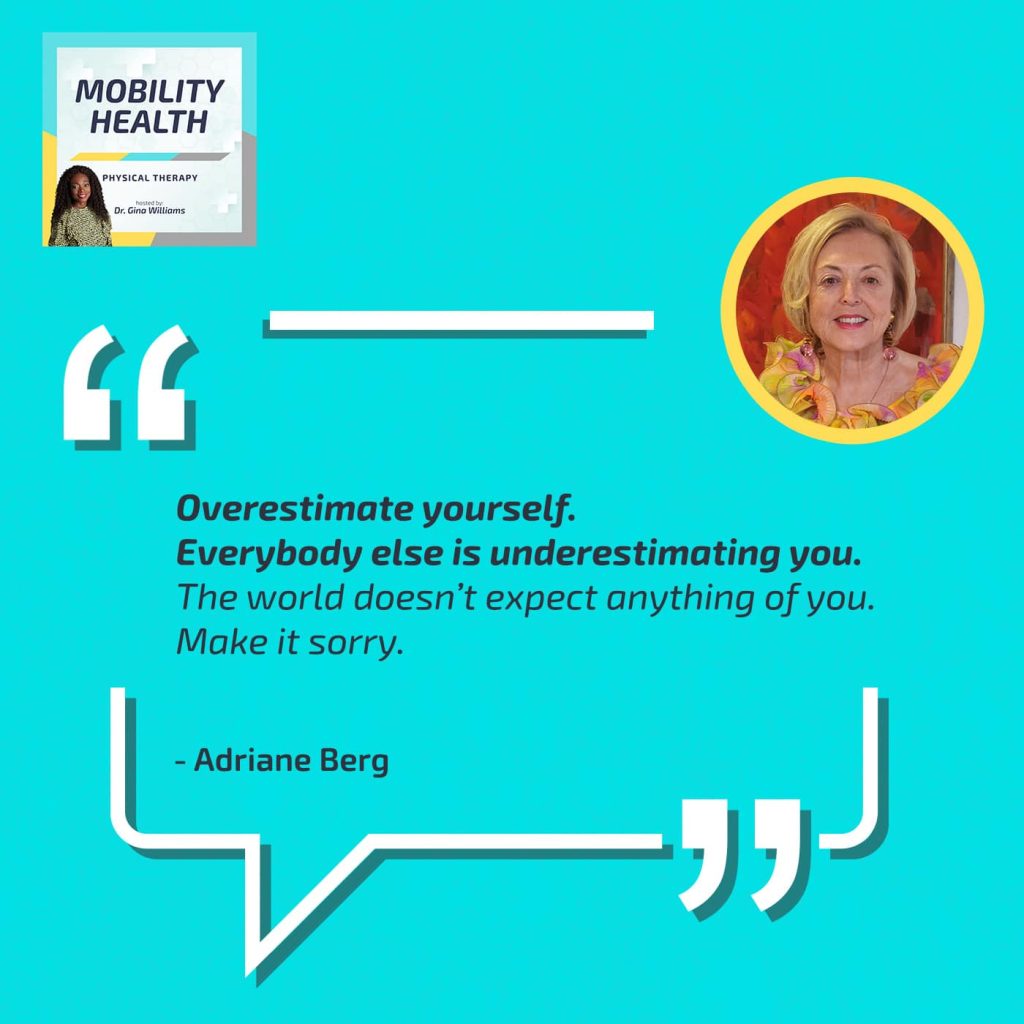
Overestimate yourself. You didn’t think I was going to say that. Everybody else is underestimating you. I always say, “The world doesn't expect anything of you. Make it sorry.” You go to a concierge at a hotel or the fellow or woman who's taking care of the excursions on a cruise ship or river cruise. You ask them, “What should I do?” They will give you the puniest. They will tell you to rest. They will tell you how nice it looks outside your window. If you were 30 years younger, it wouldn’t happen.
You say to them, “I have stamina. I can walk.” If you have some mobility issues, tell them exactly what it is because they don't know. They are making up who you are. They don't know who you are. They immediately see gray hair and they say in their mind, “This is a disabled person.” You may very well be healthier and have more stamina and ability than they do, but they never know it because they don't see you on the inside. They only see you on the outside.
In every case, you can do more than you think you can do. That would be one of the things that I would say. To get healthier and more robust, try to meet your potential. That's important. The other thing is also to be careful. If you need a cane or sticks, if you are better off with a temporary wheelchair, or if you want to use a scooter, don't be ashamed to do it. Get out there and see it. You did it. That's all you have to know.
Sometimes, the concierge team are not on purpose trying to discriminate or underestimate someone's ability. Sometimes, they feel like they are being nice and doing you a service.
Yeah, because there are a lot of people being patronized. Sometimes, those come from concern. They truly think you can do it and that you will get hurt, so there's that part, and then there's the liability. If they tell you, “Sure, go out and do that,” and you do get hurt, let's say I see a lawsuit in my future. There are a lot of reasons. You are very clear in your mind what you want to do or what you want to take on, and sometimes you have to speak up because if they give you things that are too light or heavy, you have to say, “That's not my style. I would like to do something more active or less active, slower-paced or faster-paced.” You tell them. That's the same if you go to a travel agent or if you go to a tour operator. I will tell you that 9 times out of 10, they will underestimate your ability.
You have to be very clear in your mind about what you want to do.
Making Travel Accessible And Affordable
Travel can be a barrier for some older adults to travel. Could you share some insights from your book Luxury Travel For Less and making travel more accessible and affordable?
I'm pretty proud of that because that's one of those things you write for yourself. I travel a lot and I'm like anybody else over the age of 65. I have a fixed income. There's so much that I can spend money on, and yet, unlike my old self, I was in Madrid and I took a picture in front of the youth hostel. I stayed there when I was in Madrid decades ago. That cost me $3. Now it's $20.
I can't stay there. I don't want that bed. I can't sleep on that mattress. I can't do that anymore and I need what I call luxury travel. Now, there is a whole level of 5-star or 6-star hotels. I don't necessarily mean that, but at least four-star these days. If I could do better, even better. If I'm going to go on a ship, I would like a ship with great culinary choices. How can I do that?
I put together a book with all my tricks. I have a lot of tricks and 75 different websites that I use. I will give you an example of what I mean by trick. I will give you two tricks, so you will see what I'm talking about. One trick is that everybody would love to do a river cruise, and river cruises can be expensive, but there are also freighters that are for tourists. There are also canal boats. One of the most beautiful trips in the world is down the Erie Canal in New York State. These are the same beautiful slow trips and they are wonderful.
Ferry trips are fantastic. You'd be surprised how luxurious they are. Another drawback sometimes is airplanes. They are expensive to fly. You want to go to a lot of places and sometimes you want to go to exotic places. I always try to use a national airline like the airline of Morocco or Turkey, the airline of a country. Why? It’s because most of the time, when you check it out first, they will give you a free stay.
Emirates even pays for your hotel in certain circumstances if you stay there in between your other flights. I will give you a real itinerary that I took. I was in Amsterdam, but I had to get to England, so I went to Morocco because Air Maroc allows you to go over there at the lowest possible cost from Amsterdam, Morocco, and England. Not only that, the extra flight is free. You have to look at things like that and there are websites that I have in there that tell you which ones do that.
Another website I love that's in the book is the ones that tell you when the posted cost of an airline is a mistake. Airlines do post and they sometimes make mistakes. It could be $10. It's supposed to say $10,000 for a first-class, but like a store, if you book that minute, you will get that ticket, but it flies away because somebody is smart enough to look at it and fix it. You want to get an alert. There are alert services. These are 2 or 3 out of hundreds of little things you could know, and that's simply on LuxuryTravelForLess.info and it's free.
That's an amazing tip. I will start to use that right away.
It's not age-based. Anybody can use it.
Solo Travel
Many of our readers have family members in their 60s or 70s, or they are in their 60s and 70s and curious about solo travel. What safety tips or best practices would you recommend to someone interested in embarking on their first solo adventure?
I'm going to give the name of Journey Woman. They are not a sponsor. They don't pay me anything to say this. I'm not their spokesperson. I want you to know that. Journey Woman has been around for many years, and it's devoted only to solo travel for women. They do an excellent job of putting everything together. I will say that I was nominated for one of their awards. It's a good place.
The other thing you should know about solo travel is that 63% of the women who travel are married. Don't think that it's only for people who are widows and they never married. They are not all solo in life. They are just solo in travel. It's an interesting mix of people that you will meet. The other thing I will say about solo travel is this is one of the things that I would love you to join our Facebook Salon. We have a free Facebook Salon, and one of the things that we are trying very hard to do is advocate to reduce the single supplement.
If you are a solo traveler, are you paying extra? You are paying a lot extra for your accommodations. Sometimes, it's over the top. It’s more than you should be paying. We are an advocacy organization for older adults and mature travelers, many of whom are solo travelers. The other thing is we have 2 or 3 podcasts by women and now we are studying something we have called Travel Bros.
I had the first man on, Don Mankin, who was with National Geographic. These are solo travelers, and how they do it. They tell you on the podcast what they pack. What do they do about safety? Where would they travel to? It's all up to you, but my advice is always to start in a group. Find your feet if you have never traveled by yourself. See how it feels to be in a group because once you do that, you are not alone anyway. You are not a solo traveler.
That will give you all of the confidence to do some of the things independently. The idea is, for example, I do this a lot. If I'm in a group, I also pick something that people may not be that interested in on a free day, and I go by myself. I see what that's like. In my case, I love theater. Not everybody loves theater, so I have learned how to go to theater alone almost all over the world. That's all competency building. From that, I could pretty easily go by myself.
If you've never traveled by yourself, see how it feels to be in a group. It will give you all of the confidence to do things independently.
Caregiver Travel
That’s awesome to help someone understand how it can be done. Even if they have a spouse or someone but going out on their own and feel safe and comfortable to do so. You also advocate for caregiver travel. Can you share some insights into planning and enjoying travel as a caregiver and what you have seen as the most common barrier that they face?
I came back from a house tour. We have something called Modernism Week here in Palm Springs. That also reminded me to say about solo travel. One of the things you can do is start to travel in your local area, have a wonderful time, and see how it feels. See how it feels to go to a restaurant by yourself. Are you comfortable? Are you not comfortable? Where would you like to sit? Pretty soon, it becomes a pretty interesting thing to do and you begin to do it very well and you like it. Be aware of that.
When it comes to caregiving, I wrote CaregiversTravelGuide.com. It's free. That’s very controversial. It's not what you think. It's a book that teaches people how to travel with their care recipient, which everybody loves across the board. How to navigate an airport, and how to wear a special sunflower, which tells people that the person has a cognitive disability. How to go at times, when to book your flights, how to keep people hydrated and all the things that you need to do if you travel with a caregiver. No controversies.
The second part of the book was about how to travel and leave your care recipient at home and get respite care for yourself to take a little break from the very difficult task of being a caregiver. How to do this with technology so that they can find you and you can find them, you can continually meet with them. You can keep up with their caregivers if they are in assisted living a nursing home or somebody's at home. That people either loved. They thought it was the most liberating thing they ever came across. A lot of people in the field of caregiving said, “People who are family caregivers should not travel. It's a burden and they should bear it.” It was a disgrace that I was helping them to travel. I have had pushback on that.
Mixed reviews on the morality of helping people travel even if they have a care recipient in their life and even if that care recipient is well taken care of in their absence. That was a surprise to me, but yes, there is a faction that believes it is the burden and most of the women's burden. I will tell you that the only people who criticized me were men. Not one criticism from one woman. There are a lot of men who are also caregivers, but just saying. Fun fact.
A Tool To Combat Loneliness
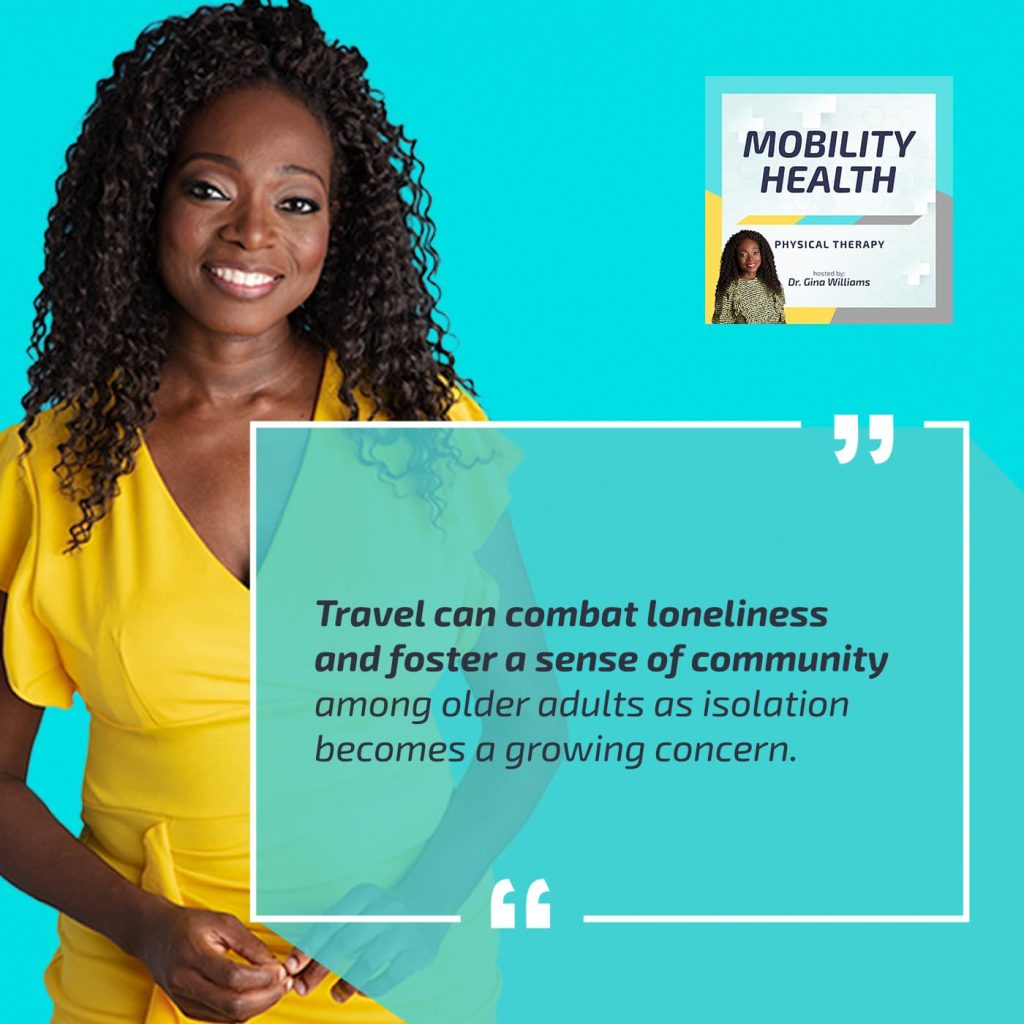
Isolation in the aging population is a growing concern. How do you believe travel can be used as a tool to combat loneliness and foster a sense of community among older adults?
This is a good surprise. First of all, let us say that we are dealing with people who are homebound. They are isolated because they literally cannot get out, whether it's stroke or cognitive issues. They may be in nursing homes or in an assisted living community. We are talking about that group for a moment. We provide something called Wowzitude. It's a funny name, but it's a company. It’s not my company but I brought them to the public because they started in nursing homes where you have a subscription. You get together with other people in your community and you watch television once a week.
It's real-time travel. They took you around New York. They take you to a town in Romania. It’s once a week and you get recipes. You get a book to read. You get background information. Here is a great part. If you have somebody with you that has tech-savvy, you can ask real-time questions of the guide right there. This is not on demand. This is there at the time that the guide is taking people through the Vatican, let's say. That's called Wowzitude and you will find that on AgelessTraveler.com. That's one isolation.
The other thing is for people like us, including you. A time comes when you lose your friends, and they move. I’m not saying that everything is a disaster. Many people just move. You want to reestablish friends through tourism. That is a great way. What happens? You meet some people on a cruise or a group tour. You say, “I'm going to exchange emails. I love you. I wish I knew you at home,” and then you never see them again for the rest of your life.
You meant that when you said it but then things happen when you get back home.
We are working with the tourism industry to provide something that's like Facebook but Facebook for travelers. We have started with our own Facebook Salon called The Ageless Traveler Salon, which you will find on AgelessTraveler.com. We were asking the people who join us, when you travel and you meet someone you like, bring them onto that Facebook so that you can continue to share and travel with them even if they are in different parts of the world.
I'm going to conclude with this. I have one podcast with a young lady who is a nomad. Nomadic living. She has no home, but she has friends all over the world and because they know where she is, they will write to her, “You are going to be in Brazil? I'm in Brazil that day, too. Let's go meet.” You would be surprised how many friends you can make that you see, not just online, but you actually meet up with if you keep in contact with your new travel buddies, and that's what I mean by it. It helps you. You are not as isolated because the world is your friend, not just the three people that live around you. You may not even know the person next door, but you may know very well the people you traveled with.
You're not isolated because the world is your friend.
Such great advances and travel for everyone, not just older adults but even some things that you may not feel are accessible to you. The information is out there. Thank you so much, Adriane. It’s a pleasure having you. If you are looking for the rest of this episode, you can go to MobilityHealthPT.com, or you can go to AgelessTraveler.com to find out more about how to travel. Thank you so much.