Targeted training that reconnects your brain and muscles, helping you rebuild balance, coordination and control after injury, surgery or a neurological change.

Every movement you make depends on clear communication between your nervous system and your muscles. Your brain sends signals, your muscles respond, and sensors in your joints and tissues report back where your body is in space. After an injury, surgery, long period of pain or a neurological condition, that communication can get disrupted. Muscles may switch on late, stay weak or compensate for each other, and balance and coordination can feel off. Neuromuscular re-education is a physical therapy approach that retrains those pathways through specific, progressive exercises. Your therapist uses balance work, coordination drills, posture and stability training, controlled movement patterns and real-life tasks to help your body relearn efficient, safe movement. At Mobility Health Physical Therapy, neuromuscular re-education in Bay Ridge, Brooklyn is designed around what you need to do every day, from climbing subway stairs to returning to sport.
Strength alone does not guarantee good movement. You can have strong muscles that still fire at the wrong time, which can leave a joint feeling unstable or lead to the same injury again. Neuromuscular re-education focuses on timing, control and awareness, so strength turns into smooth, reliable movement. Your one-on-one sessions are led by a licensed physical therapist who watches every rep, gives real-time feedback and progresses the challenge as your control improves. Sessions can take place at our Midtown clinic or in your own home through mobile PT, where practicing in your real environment can be especially useful.
Neuromuscular re-education can help at many stages of recovery. These are some of the people our team often works with.
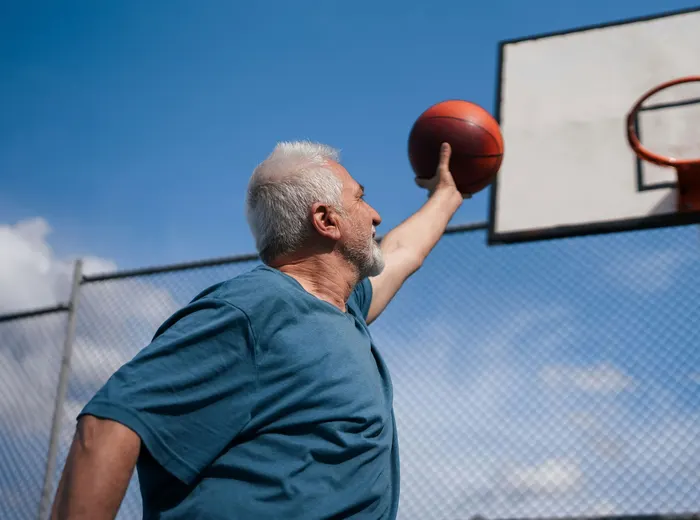
A sprained ankle, knee surgery or shoulder injury can leave the area feeling unsteady even after the pain fades. Your therapist uses neuromuscular re-education to restore joint awareness and muscle timing, which is an important part of post-surgical rehabilitation and return to sport, and helps you trust the area again. It also helps reduce the guesswork about when you are ready for more.
If you feel unsteady, have had a fall or notice changes in how you walk, balance and coordination training can make a real difference in daily confidence. Our team draws on experience in geriatric care and gait analysis to build a plan that keeps you moving safely around your home and city.
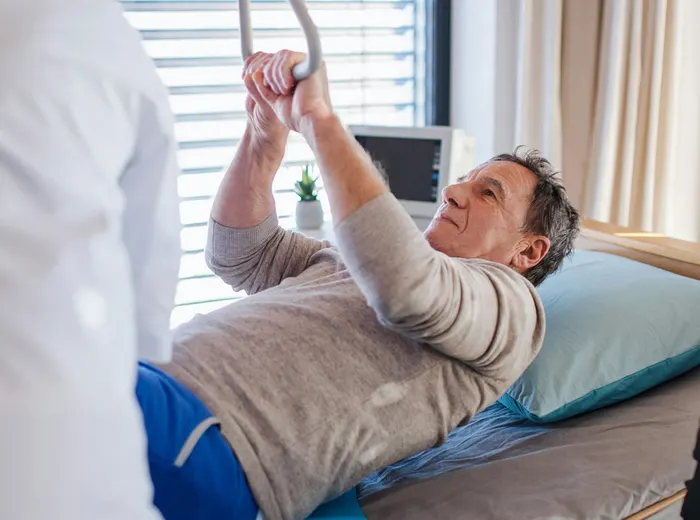
Conditions that affect the nervous system can change how you move, balance and coordinate. Neuromuscular re-education is a core part of neurological rehabilitation, using repetition and meaningful tasks to help your body build new patterns. Your therapist coordinates with your physician or specialist when that supports your care. Sessions move at a pace that feels manageable for you.
Neuromuscular re-education is active, focused work. Here is how your therapist will guide the process.
Your evaluation looks closely at how you move: balance, joint control, muscle timing, posture and how you handle everyday tasks. Your therapist pinpoints where communication between your nervous system and muscles is breaking down, then explains what they see in plain language. You will understand the why behind every exercise you are given.
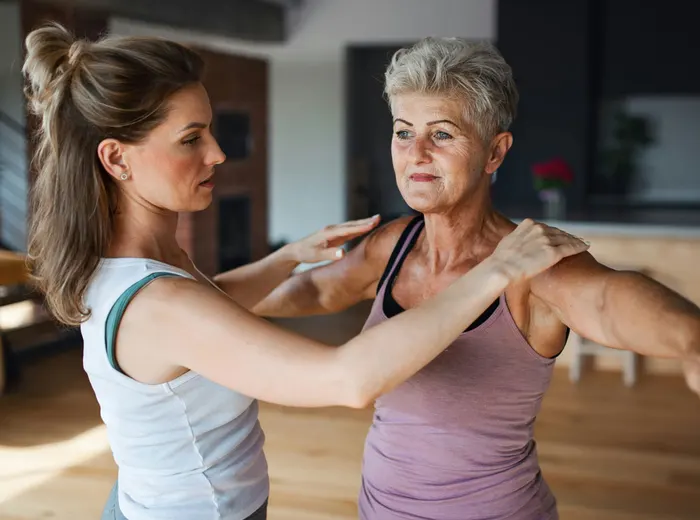
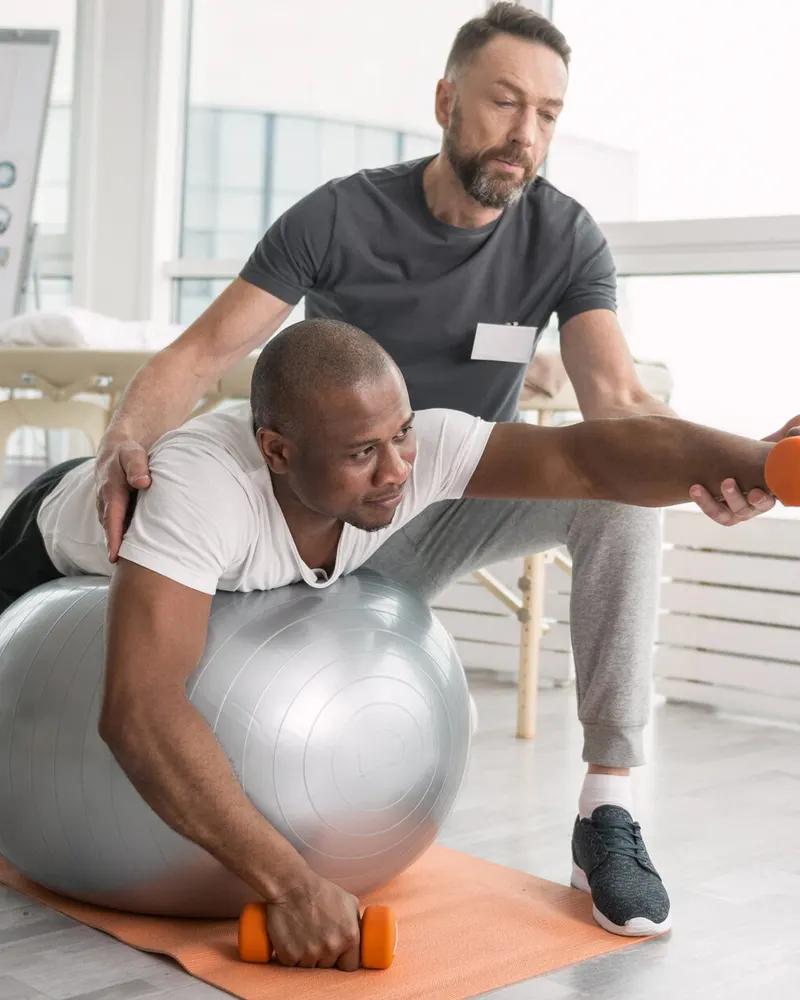
Sessions include specific exercises such as balance challenges, controlled reaching or stepping, stability drills and movement patterns that mirror your daily life or sport. Your therapist gives cues and corrections in real time, which is one of the biggest benefits of one-on-one care. Exercises are kept at a level that feels challenging but safe.
As control improves, your therapist adds speed, complexity, load or less stable surfaces so your new patterns hold up outside the clinic. You also get a short home program, because consistent practice between visits is what helps the changes stick. Your therapist reassesses regularly to keep your plan on track.
If you have had falls, feel dizzy or have a neurological condition, tell your therapist before your first session. Balance work is always set up with safety in mind, with your therapist close by and support available, and exercises are kept at a level that challenges you without putting you at risk.
Gina and Mobility Health have been great setting me on a path to recovery after bariatric surgery. I was so overweight I walked with a waddle, and had no balance. She helped me understand how my muscles have been “on strike,” and how to get them back to work. Physical therapy requires work from the patient, outside of the sessions and Gina helps set you up for success to keep your recovery moving forward.

Improve balance, walking and strength with one-on-one care for stroke, Parkinson's, MS and more.

Guided movement patterns that build flexibility, strength and coordination for everyday activities and sport.

How one-on-one physical therapy in Bay Ridge, Brooklyn helps with balance & gait disorders.