Hands-on, guided movement patterns that help you gain flexibility, build strength and move with better coordination, one-on-one with a licensed physical therapist.

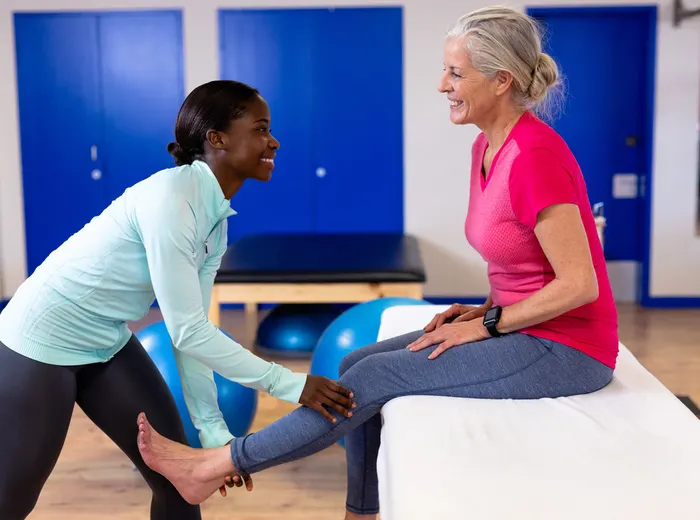
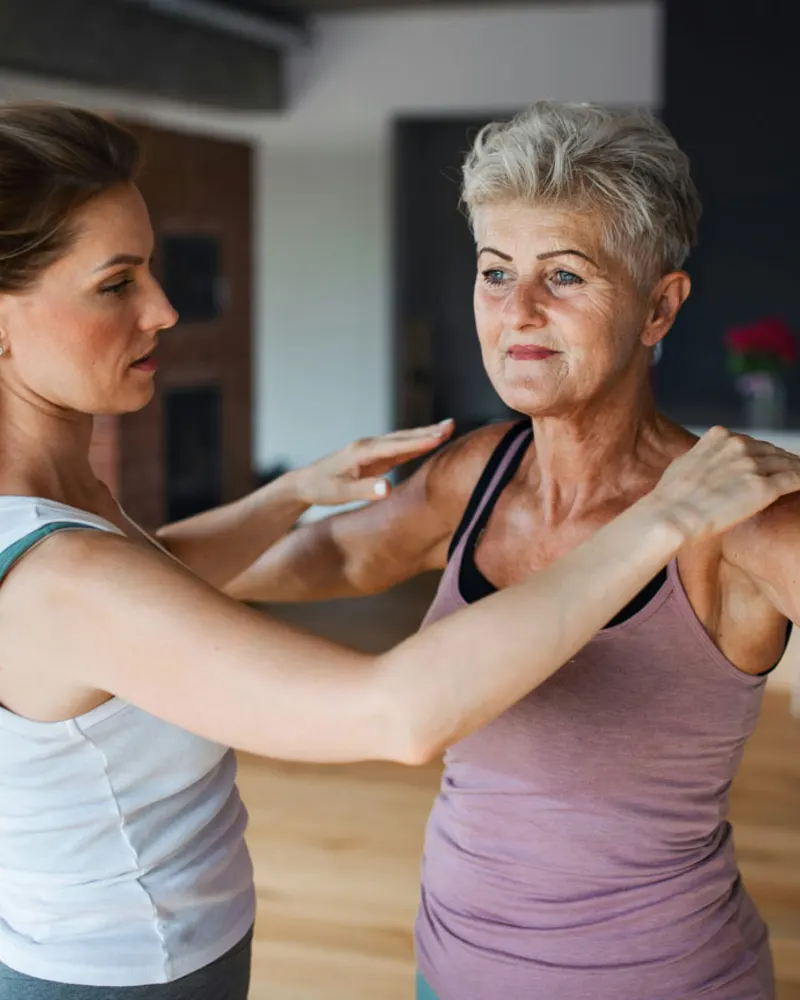
Proprioceptive Neuromuscular Facilitation, or PNF, is a physical therapy approach that uses your body's own sensory feedback to improve how you move. Proprioception is your sense of where your body is in space, and PNF taps into it by guiding you through diagonal and spiral movement patterns that mirror the way you naturally reach, turn, step and lift. Your therapist provides hands-on guidance and resistance, along with clear verbal cues, to help the right muscles engage at the right time. PNF techniques can be used to improve flexibility, such as contract-relax stretching where you briefly tighten a muscle before moving into a deeper stretch, and to build strength, coordination and stability through whole movement patterns. At Mobility Health Physical Therapy, PNF in Bay Ridge, Brooklyn is part of a personalized plan delivered one-on-one by a licensed physical therapist.
Many people know PNF only as a type of stretching, but it is much broader than that. Because it trains whole patterns instead of single muscles in isolation, PNF can help you carry gains in flexibility and strength into everyday tasks like reaching overhead, turning to check behind you or getting up from a low seat. Your therapist adjusts the resistance, speed and position to your needs, so PNF can be gentle enough for early recovery and challenging enough for athletes. PNF is often paired with neuromuscular re-education and manual therapy in the same session.
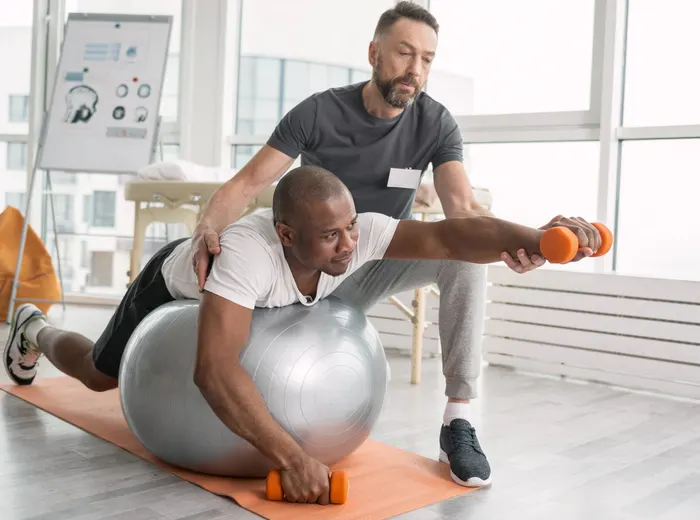
PNF is a flexible approach that can be adapted for many goals. These are some of the situations where it may help.
If your hamstrings, hips or shoulders feel tight no matter how often you stretch, PNF techniques may help you gain range of motion in a more active way. Your therapist guides the contract and relax phases so you work within a comfortable range and learn to control the new motion you gain. Many people find it more effective than holding stretches on their own.
After an injury or operation, muscles can lose strength and coordination, and movements may feel awkward. PNF patterns help your therapist rebuild control through functional movements, which can complement post-surgical rehabilitation and orthopedic care as you progress toward your daily activities, work or sport. Your therapist always works within the guidelines your surgeon provides.
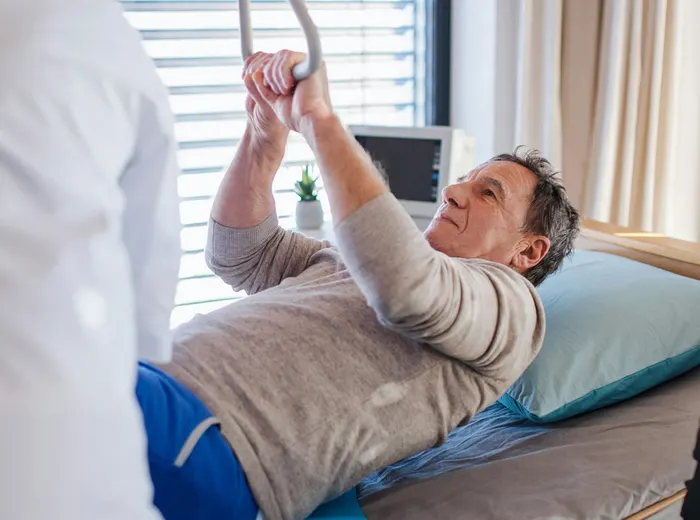
PNF has long been part of neurological and geriatric physical therapy because it uses touch, cues and patterned movement to help the body relearn coordination. If you are working on balance, trunk control or smoother movement after a neurological change, your therapist may include PNF as part of your plan.
PNF is an active, collaborative treatment. Here is what you can expect when it is part of your sessions.
Your therapist evaluates your flexibility, strength, coordination and how you perform everyday movements. Together you set clear goals, and your therapist decides which PNF techniques and patterns fit, whether that is gaining range in a tight hip or building control through the shoulder. You will know what to expect before any technique begins.
You move through diagonal patterns while your therapist provides hands-on guidance and resistance. For stretching techniques, you briefly contract a muscle, relax, then move further into the stretch. Your therapist gives simple cues throughout and keeps the effort within a comfortable, controlled range. You can always ask to lighten the resistance.
As you improve, your therapist adds challenge and blends PNF with functional exercises that match your routine. You also learn simple versions to practice at home, sometimes with a resistance band, so your flexibility and control keep improving between one-on-one visits. Your therapist checks your form and updates the program as you improve.
PNF involves active muscle contractions against resistance, so tell your therapist about recent surgery, acute injuries, joint instability, high blood pressure or any pain during treatment. Your therapist will modify or skip techniques as needed and always keep effort at a level that is safe for you.

Retrain balance, coordination and muscle control so your body moves safely and confidently again.

Improve balance, walking and strength with one-on-one care for stroke, Parkinson's, MS and more.

How one-on-one physical therapy in Bay Ridge, Brooklyn helps with hip & knee pain.