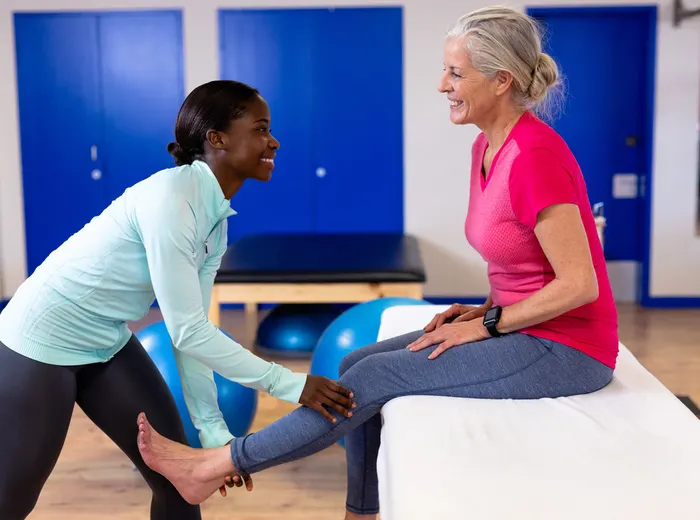
Your new knee needs to bend, straighten and carry you up the subway stairs. One-on-one physical therapy before and after surgery is how you get there.
A total or partial knee replacement resurfaces a damaged knee joint with smooth metal and plastic parts. It can take away the grinding pain of arthritis, but it does not rebuild the strength and motion you have lost over the years. That part is up to rehab, and it is where the real difference in your result is made.
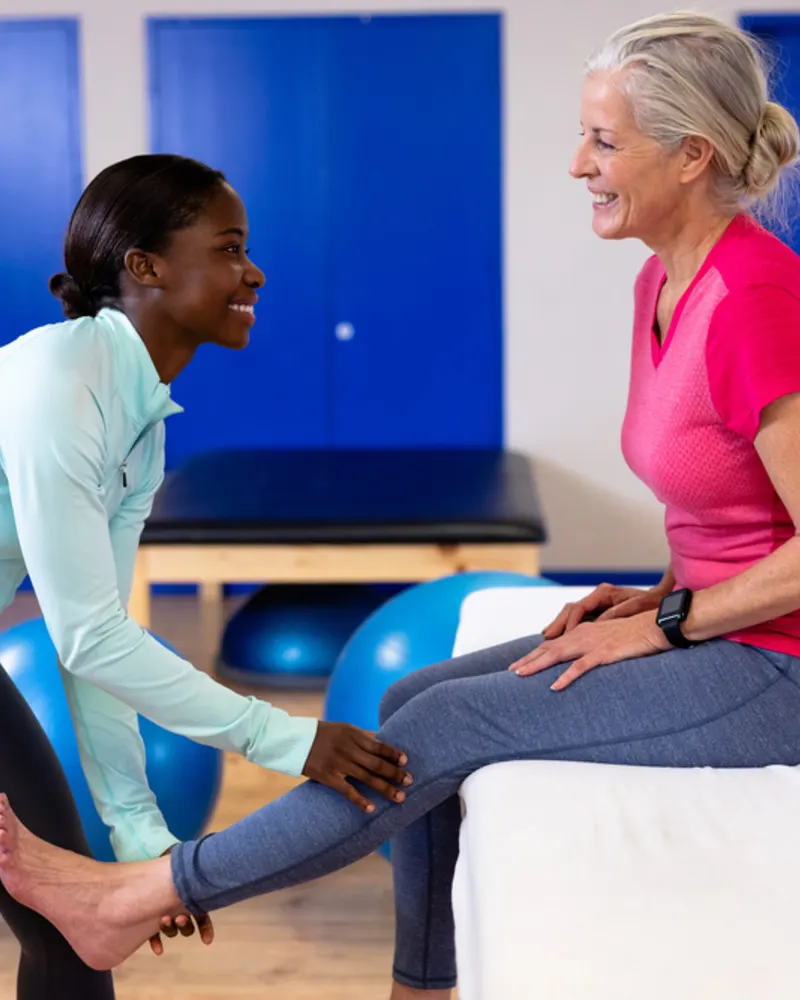
Wear-and-tear arthritis is the leading reason for knee replacement. As the cartilage thins, the knee becomes painful, stiff and swollen, and walking, stairs and getting up from a chair get harder every year.
Inflammatory arthritis can damage the whole knee joint. When it is no longer controlled by medication and conservative care, a replacement can restore a smooth, more comfortable joint.
A torn meniscus, ligament injury or fracture years ago can lead to arthritis later in life. Athletes and former athletes often find their way to a knee replacement this way.
Advanced arthritis can leave a knee bowed, knock-kneed or feeling like it gives way. Replacing the joint can realign it and make it more stable.
Physical therapy, weight management, bracing, medication and injections help many people delay or avoid surgery. When pain still limits your daily life, your surgeon may recommend replacing the joint, and we can help you prepare.
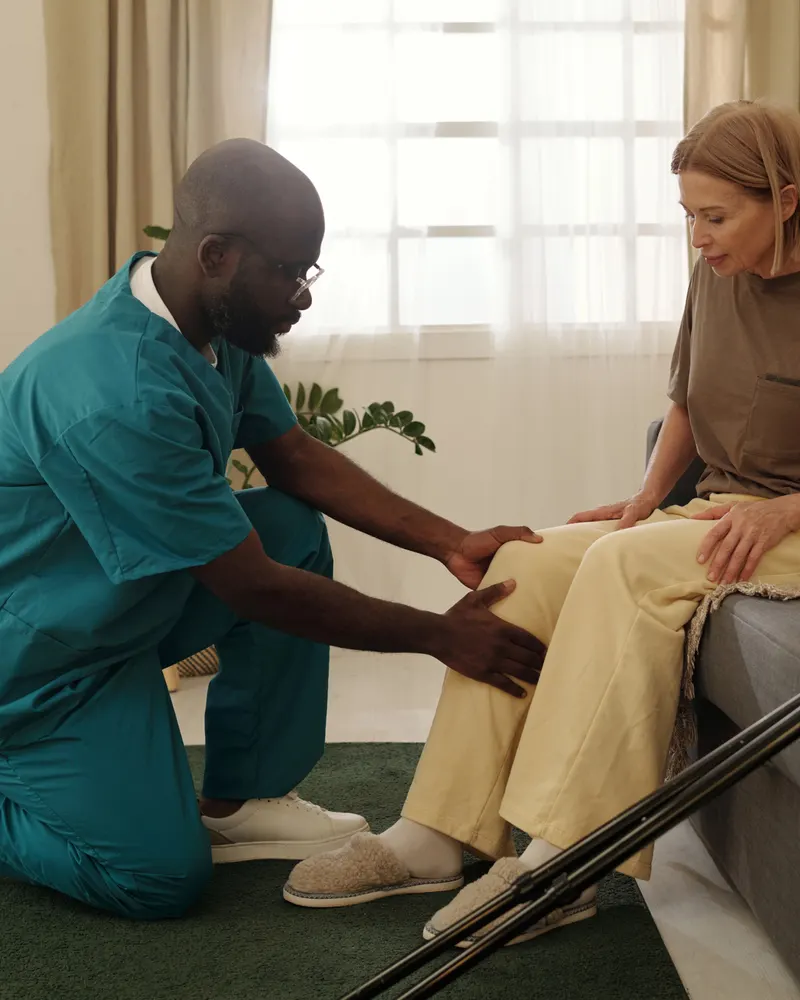

Knee replacement rehab is hard work, and it pays off. Before surgery, prehab strengthens your quadriceps and hips, improves your motion and teaches you the exercises and walking aid you will use afterward, so you start recovery ahead.
After surgery, the early priority is getting the knee to bend and fully straighten while swelling settles. We combine hands-on care, scar and soft tissue work, and targeted exercise to restore range of motion, then retrain your quadriceps, which often switch off after knee surgery. From there we rebuild strength, balance and a natural walking pattern, and practice the real-life tasks you need, like stairs, curbs, getting down to the floor and back up, and walking city blocks. Every session is one-on-one with a licensed physical therapist, and home visits are available in the early weeks when getting to the clinic is a challenge.
We measure your motion, strength and walking, then build a simple program to strengthen the muscles around your knee. You learn your post-op exercises and how to use your walker or cane ahead of time, so day one at home feels familiar.
The first weeks focus on bending and straightening your knee, calming swelling, waking up your quadriceps and walking safely with your device. We work closely with your surgeon's protocol and can treat you at home while travel is difficult.
As your motion improves, we progress to strength, balance and functional training. Stairs, longer walks, getting on and off the floor and returning to activities like golf, cycling or travel all become part of the plan, along with a home program to keep your new knee strong.
Your surgeon's protocol always comes first. We coordinate with your orthopedic team, track your knee motion at every visit and adjust the plan to how you are healing. Want to read more first? See our articles on joint replacement therapy and physical therapy before surgery.
Dr. Gina Williams has changed our lives. My spouse has gone from sitting all day to being able to walk from room to room in our apt.
It’s knowledge, hard work and persistence on the Doctor’s part thar made this change happen. Thank you Dr. Gina

Prepare for surgery, then rebuild strength, balance and a confident walk after your new hip.

Restore pain-free movement in your hips and knees so you can walk, climb, and play again.

Ease stiff, aching joints and keep moving with targeted exercise and hands-on care that lasts.